KLM Business Class Review: Flying a Fifth Freedom Flight From Singapore to Bali
This KLM business class review covers my experience flying KL835 from Singapore to Bali, a fifth freedom route operated by a Boeing 777 with a long-haul business-class cabin on a short flight.
What makes this so unique is that it’s not often that you have the opportunity to fly a specific airline outside its traditional operating region.
I was fortunate enough to experience exactly that when I flew KLM Royal Dutch Airlines from Singapore (SIN) to Bali (DPS), an unusual route operated by a European airline thousands of miles from its home country.
What makes this flight particularly interesting is that it’s a fifth freedom flight, meaning KLM can carry passengers between Singapore and Indonesia even though the airline is based in the Netherlands.
And rather than paying cash, I redeemed 25,000 Virgin Atlantic Flying Club points, plus taxes and fees, for a business-class seat on KLM’s KL835.
But there’s an important question here…
Is redeeming 25,000 points for a business-class experience on a flight lasting only about two and a half hours actually worth it?
In this review, I’ll break down the seat, onboard experience, food, redemption cost, and how KLM compares with other airlines flying between Singapore and Bali.
More importantly, I’ll explain whether the added comfort justifies spending valuable points on such a short flight.
What Is a Fifth Freedom Flight?
Before getting into the experience, it’s worth explaining what makes this flight unusual. A fifth freedom flight allows an airline to transport passengers between two countries outside its home country as part of an international service connected to its home market.
For KLM, that means operating a route such as:
Amsterdam (AMS) → Singapore (SIN) → Bali (DPS)
Even though KLM is a Dutch airline, passengers can book the Singapore-to-Bali segment without ever traveling to Amsterdam. This is possible through international aviation agreements that grant airlines specific commercial traffic rights.
These flights are particularly interesting because they introduce airlines into markets where they wouldn’t normally compete.
Instead of choosing exclusively between regional airlines, travelers flying from Singapore to Bali can experience a European long-haul airline on a relatively short flight.
For KLM, the economics also make sense. By selling seats between Singapore and Bali, the airline can generate additional revenue from passengers who aren’t traveling to or from the Netherlands.
That creates another source of demand for an aircraft already operating within its broader international network. It’s a practical example of how airlines attempt to maximize revenue across multiple markets.
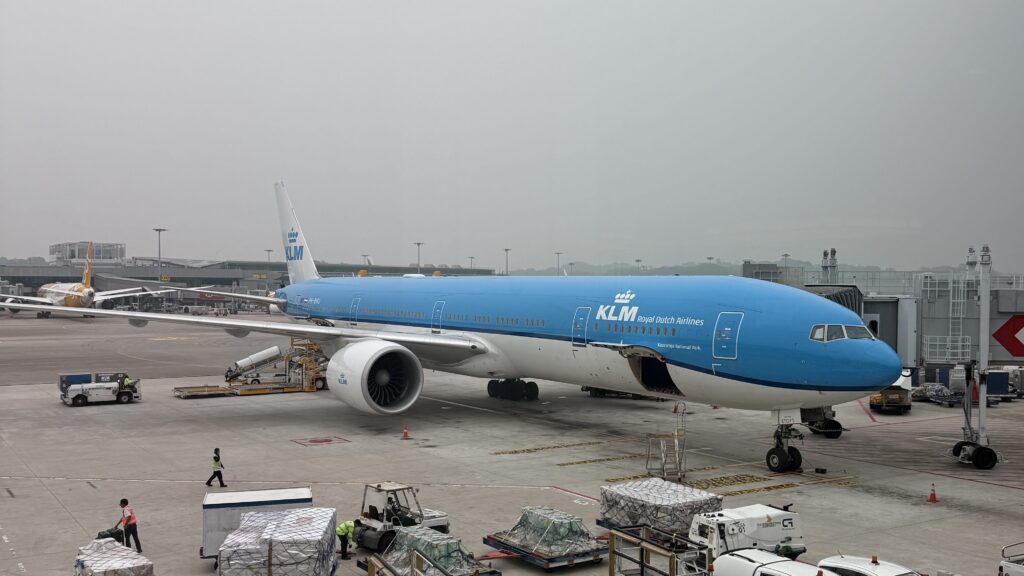
The Lounge: KLM Business Class at the Qantas Singapore Lounge
One of the more unexpected aspects of flying KLM business class from Singapore to Bali was the lounge arrangement at Singapore Changi Airport.
Despite KLM being a member of SkyTeam, eligible business-class passengers on my flight were directed to the Qantas Singapore Lounge, operated by an airline belonging to the competing oneworld alliance.
It’s an interesting reminder that airline partnerships extend beyond their respective alliances. Lounge access can be arranged through individual commercial agreements, allowing airlines to provide premium ground services without operating their own lounges at every airport.
Inside the Qantas Singapore Lounge
The Qantas Singapore Lounge opened at 2 PM on the day of our visit, and we arrived shortly afterward. Given how early we arrived, the lounge was relatively quiet, with very few passengers and plenty of available seating. This made for a particularly relaxing experience before our flight to Bali.
The lounge itself was spacious, featuring a modern interior with a combination of individual armchairs, communal tables, and counter seating. The green upholstered chairs, warm wood finishes, and open layout gave the space a welcoming atmosphere, while the lack of crowds made it easy to find a comfortable spot to settle in.
Food options were decent, with a selection of dishes available from the buffet. While nothing particularly stood out as spectacular, the offerings were perfectly adequate for a pre-flight meal or snack. The dining area was also spacious, with plenty of tables and seating separate from the main lounge.
The lounge also featured shower facilities, a particularly useful amenity for travelers connecting through Singapore after a long flight or looking to freshen up before their next departure.
Overall, I enjoyed my time at the Qantas Singapore Lounge. It wasn’t necessarily an experience I’d go out of my way to arrive hours early for, but the comfortable seating, reasonable food selection, and relatively quiet atmosphere made it a pleasant place to relax before boarding.
For a relatively short flight to Bali, having access to a full-service international lounge was a welcome addition to the KLM business-class experience.
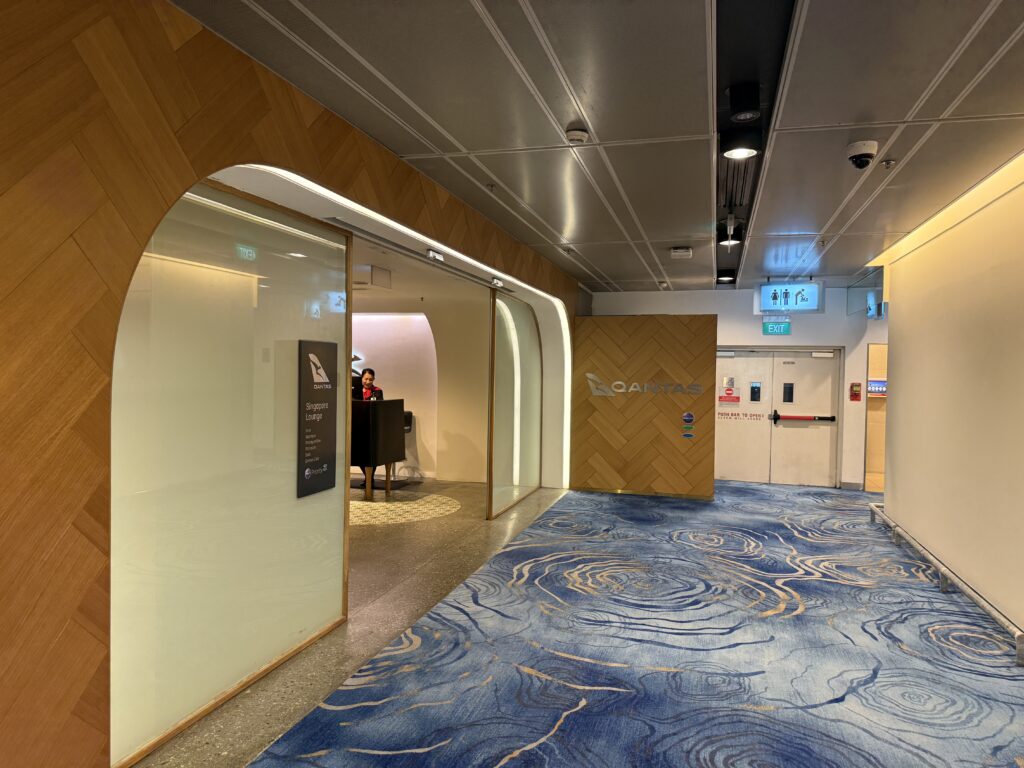 KLM business-class passengers on this flight were directed to the Qantas Singapore Lounge despite the airlines belonging to different alliances.
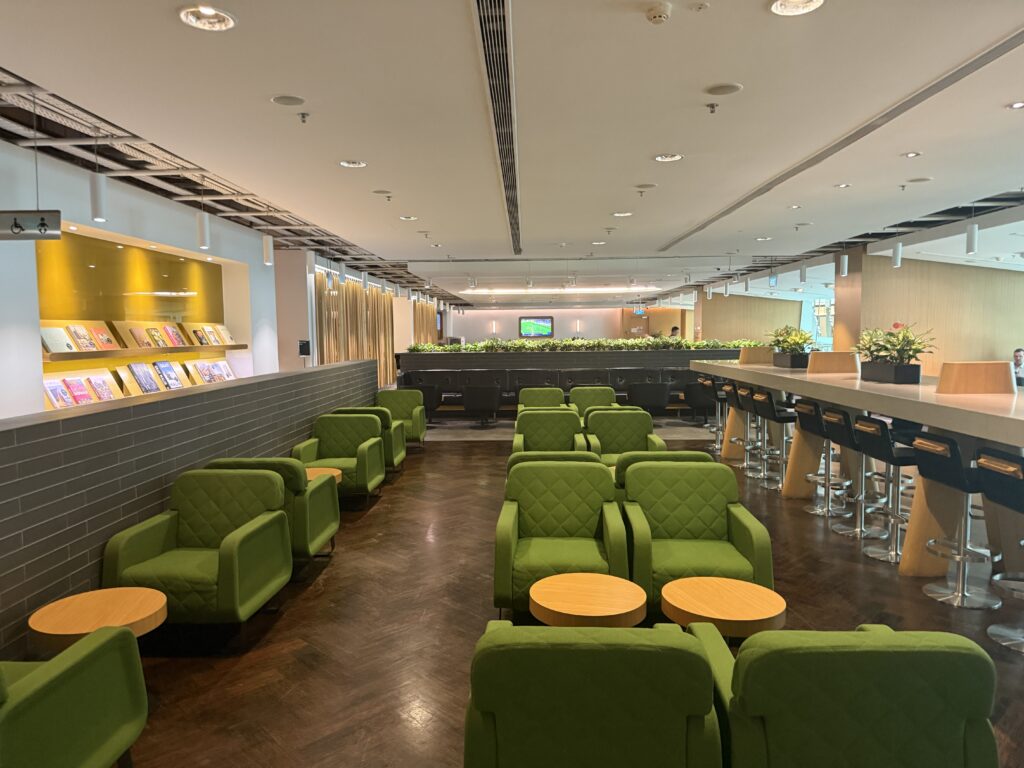 The Qantas Singapore Lounge offers comfortable seating areas for eligible KLM business-class passengers departing Singapore.
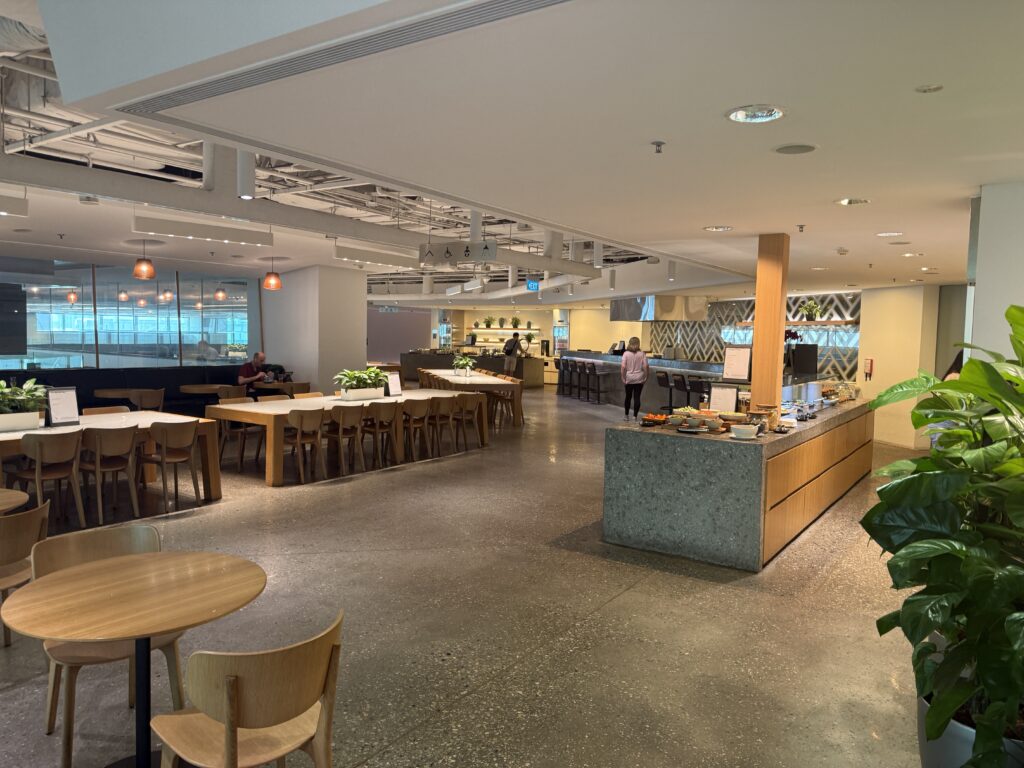 The Qantas Singapore Lounge features a spacious dining area with buffet stations, communal tables, and bar seating for eligible passengers before departure.
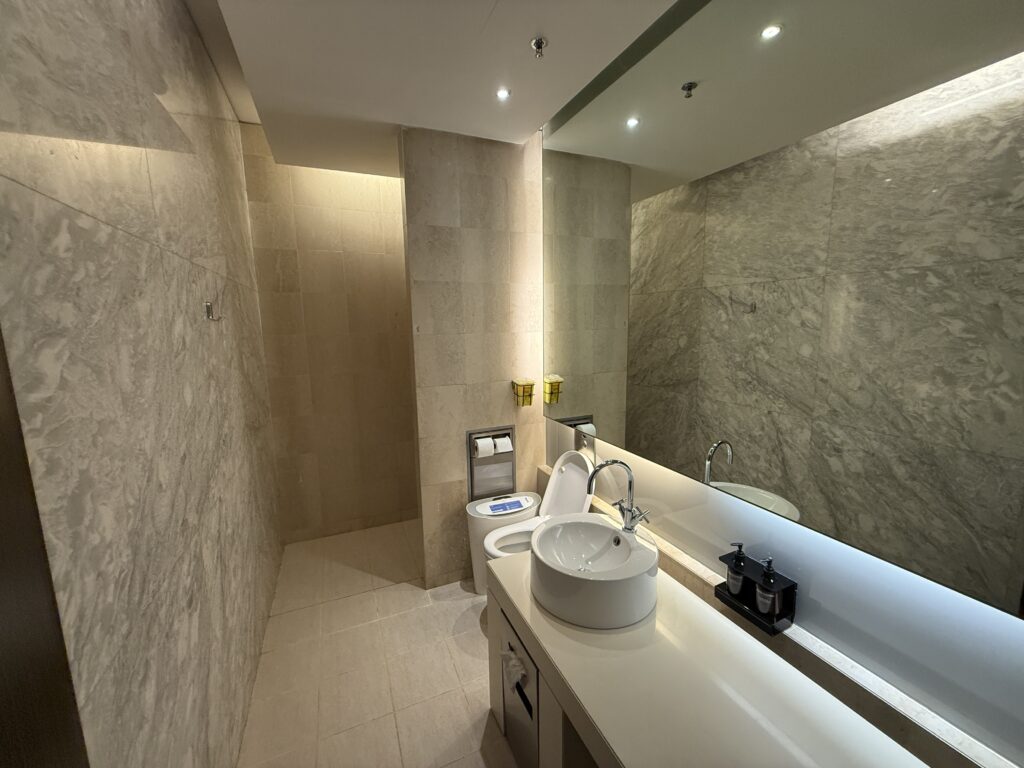 Shower facilities provide an opportunity to freshen up before departure or between connecting flights.
Does Lounge Access Add Value?
Lounge access is worth considering when comparing business-class fares, particularly on shorter routes where the actual time spent onboard is limited.
While the flight itself may last only a few hours, access to a comfortable lounge before departure can extend the premium experience beyond the aircraft.
However, it’s important to distinguish between an included benefit and one that justifies a substantial fare difference. A lounge visit can improve the overall journey, but its value depends on how much time you have before departure and whether you would otherwise pay for lounge access.
For me, the Qantas lounge arrangement was an interesting and welcome addition to the KLM business-class experience, especially given the airlines’ different alliance memberships.
The Seat: Long-Haul Business Class on a Short Flight
One of the biggest reasons I was interested in flying KLM was the aircraft. Unlike many short-haul flights that feature standard recliner-style business-class seats, KLM operates this route using a widebody aircraft designed for much longer journeys.
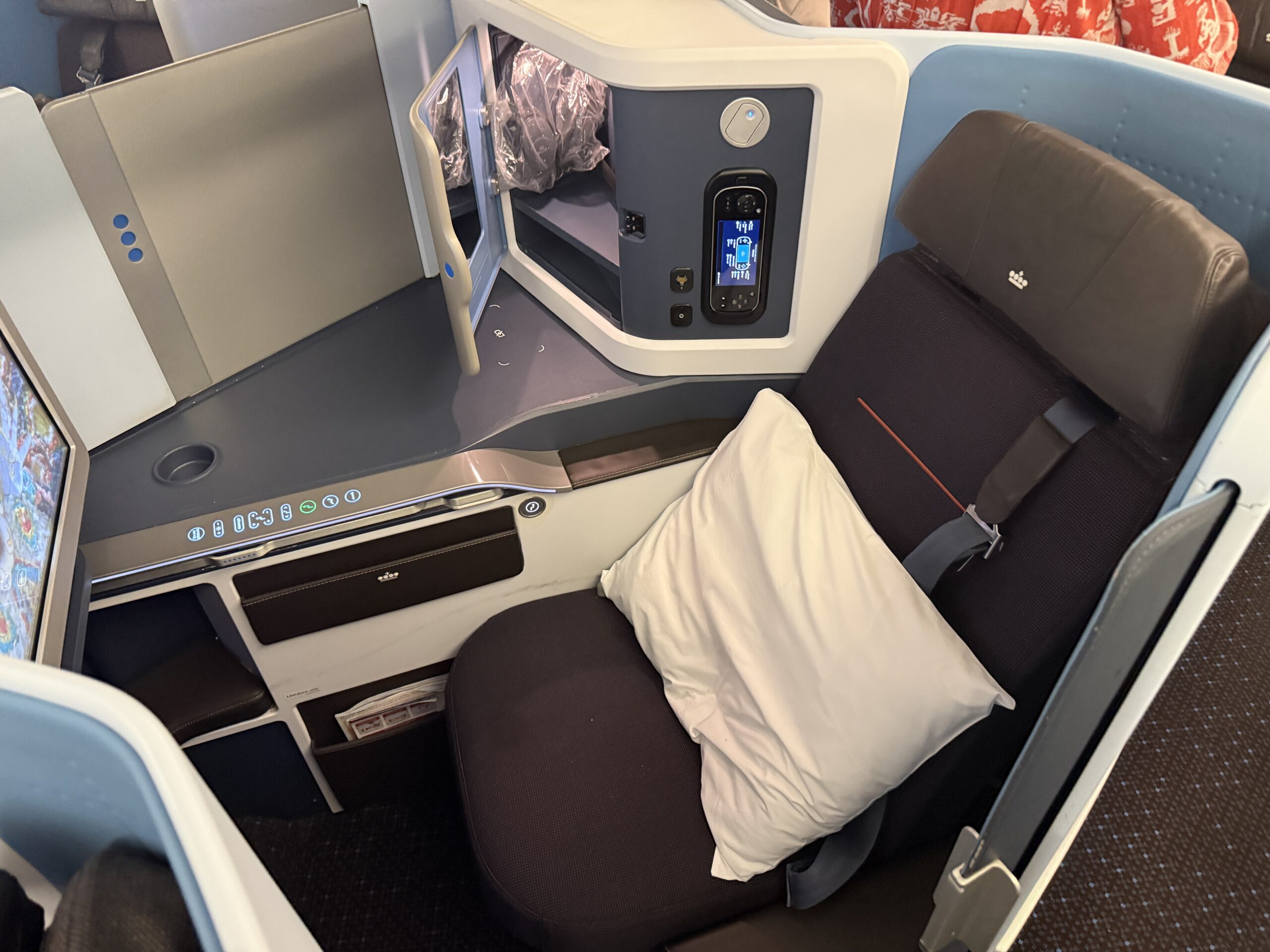
On my flight, the scheduled aircraft was a Boeing 777-300ER, which features KLM’s World Business Class cabin. Depending on the aircraft’s configuration, KLM’s 777 business-class seats can offer a fully flat bed, additional privacy, and considerably more personal space than a conventional short-haul premium cabin.
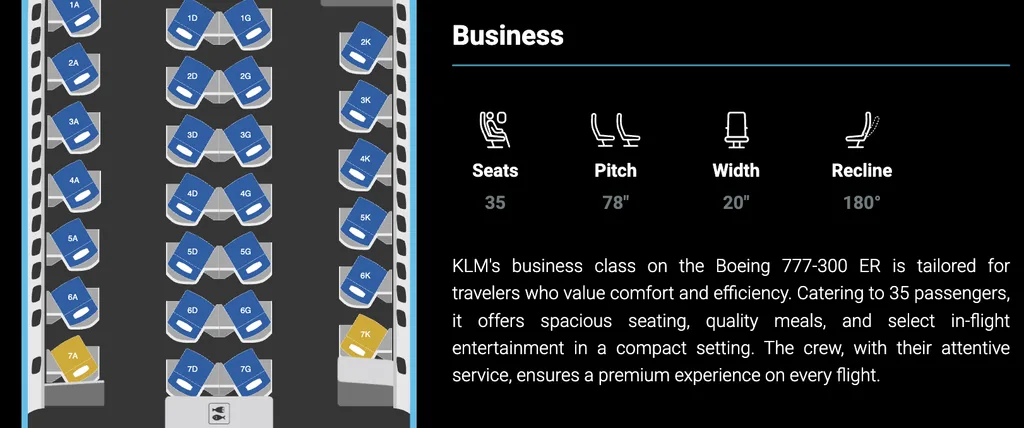
That’s a fairly unusual product for a flight between Singapore and Bali. But the more interesting question is how much of that comfort you can actually use.
On a flight lasting approximately two and a half hours, you’re not going to spend eight hours sleeping in a lie-flat bed. Instead, the practical advantages come down to personal space, seat comfort, privacy, and the overall experience.
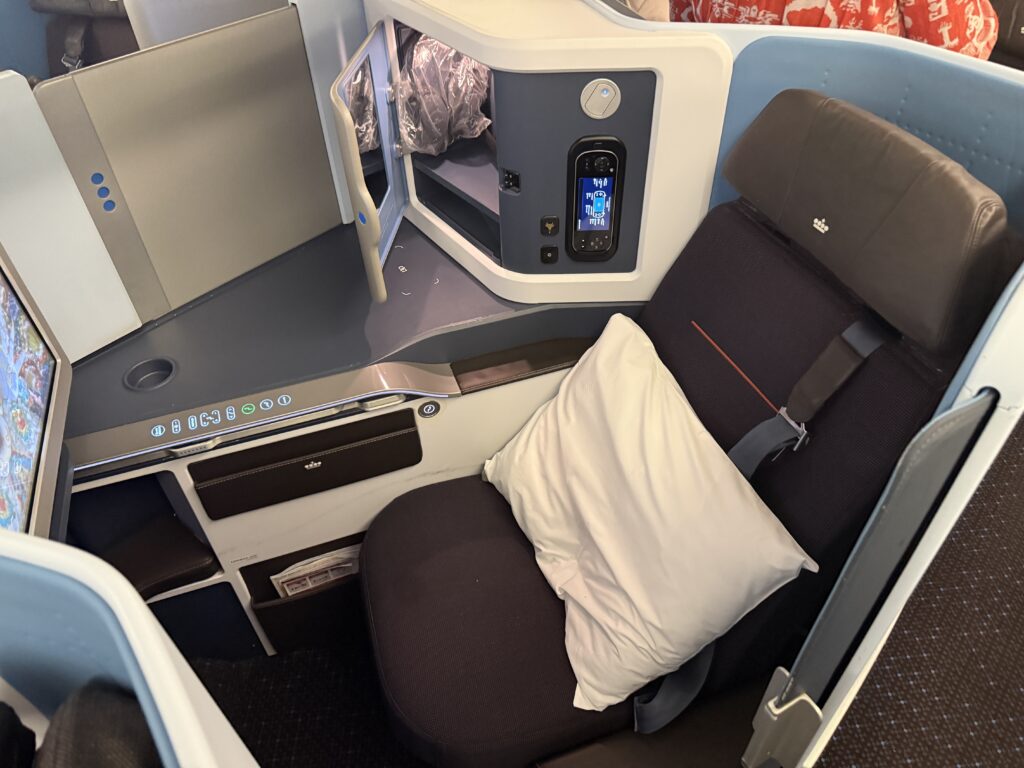
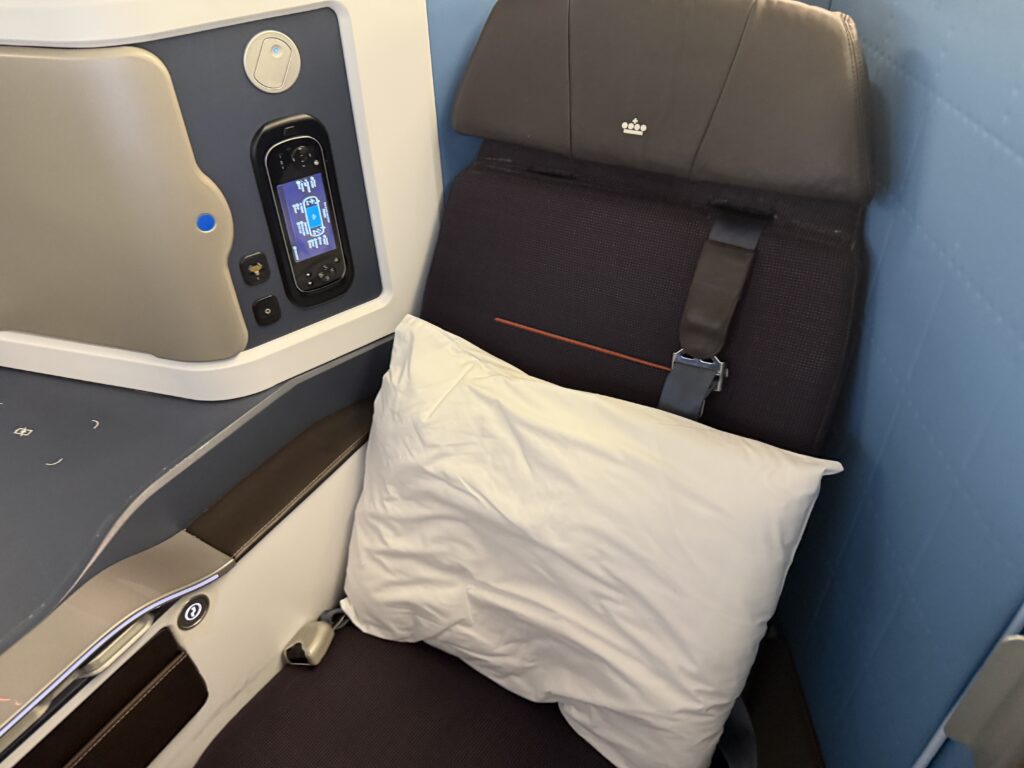
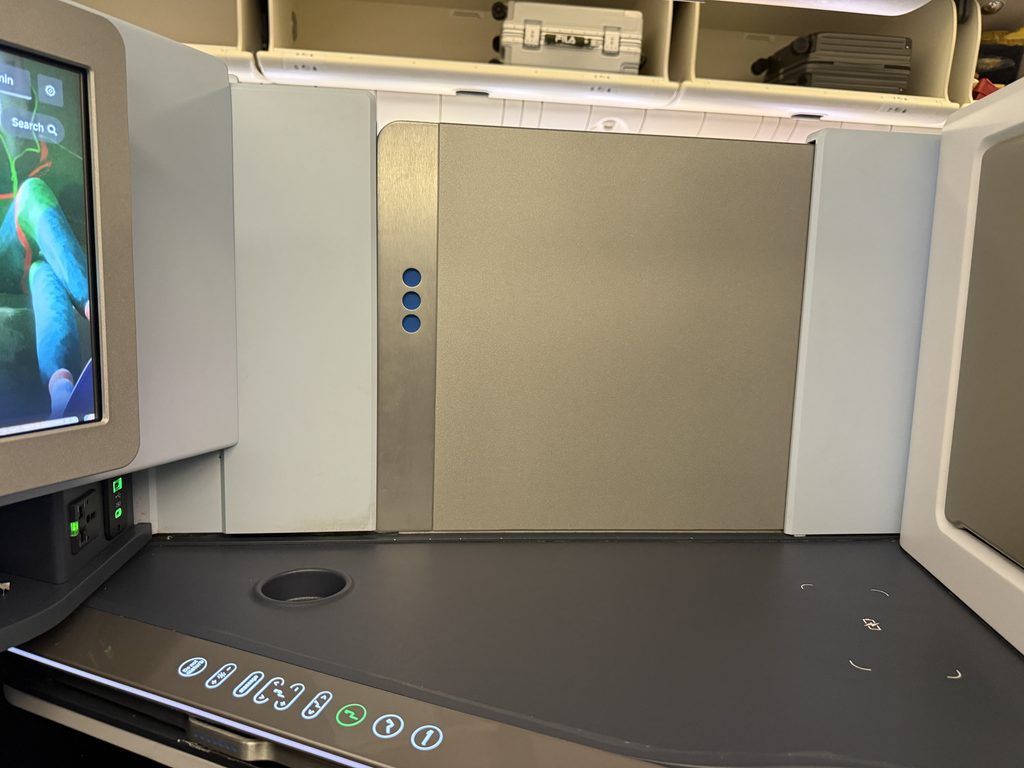
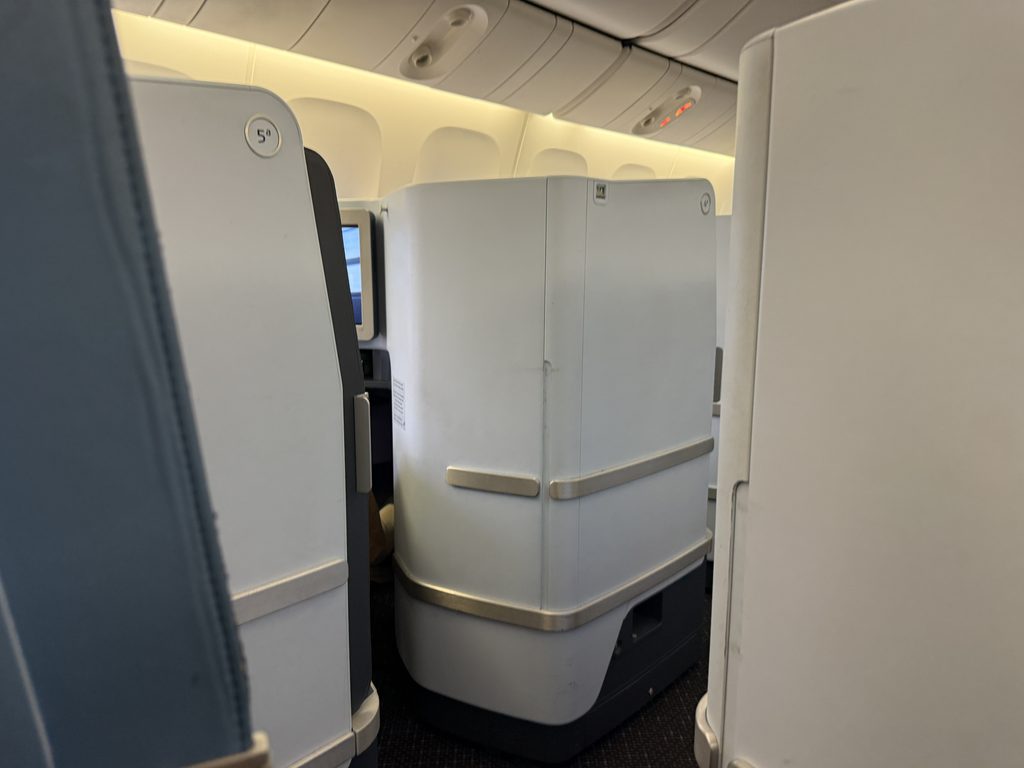
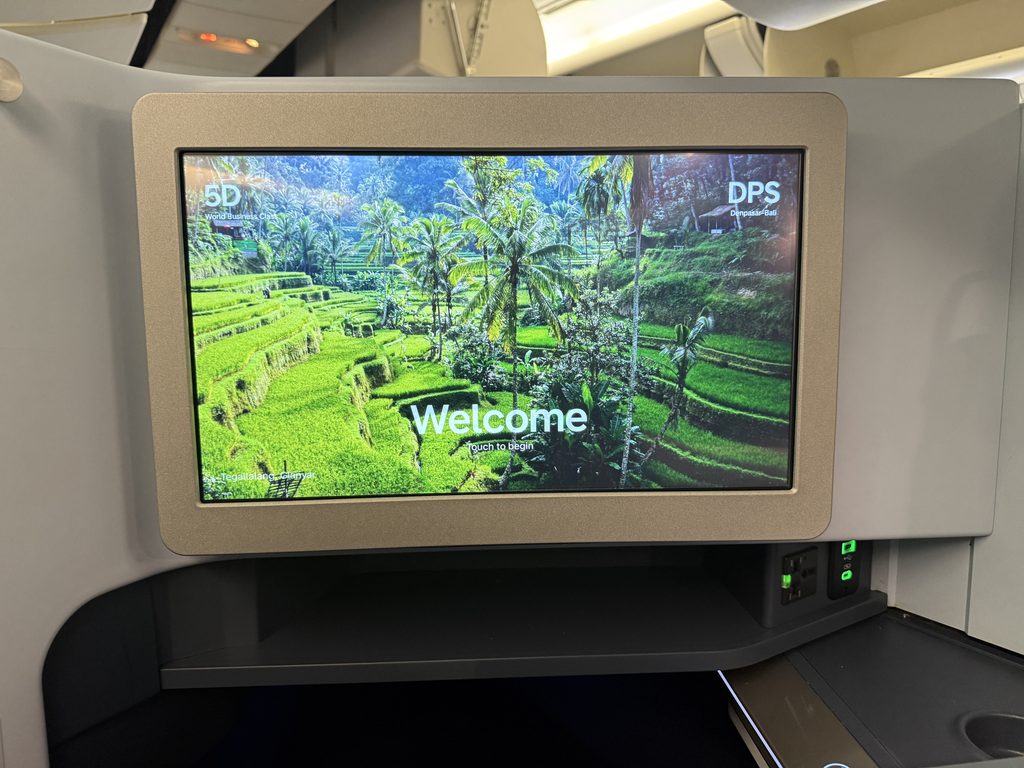
My experience: I was in seat 5D, one of the center seats in KLM’s 1-2-1 business class configuration aboard the Boeing 777-300ER. The layout provides every passenger with direct aisle access, while the seat itself offers a lie-flat bed, personal storage, adjustable controls, and a privacy divider between the center seats. For a flight lasting approximately two and a half hours, it was more space and comfort than I realistically needed, but it made the short journey feel like a long-haul premium experience.

- The privacy divider between KLM’s center business-class seats, from seat 5D on KL835.
- High seat shells create separation between passengers in KLM’s Boeing 777 World Business Class on KL835.
Does a Lie-Flat Seat Matter on a Two-Hour Flight?
This is where the value equation becomes interesting. A lie-flat business-class seat can be extremely valuable on a long overnight flight. Being able to sleep comfortably may substantially improve how you feel when you arrive.
On a short daytime flight, the benefits are different. You’re primarily paying for additional space and comfort rather than meaningful sleep.
That doesn’t make the experience worthless….but it does mean the same business-class seat can deliver very different value depending on the flight duration.
The Food: What Does KLM Serve on a Short Business-Class Flight?
Food is another area where business class can distinguish itself from economy. On a flight this short, there isn’t much time for a drawn-out meal service.
The crew has to complete the service between takeoff and the preparations for landing, which can make the experience feel compressed compared with a long-haul flight.
KLM’s business-class catering can also vary by route, flight timing, and operational arrangements.
For me, the important question wasn’t whether the meal matched what you’d receive on a ten-hour international flight.
It was whether the food and service added meaningful value to an already short journey.
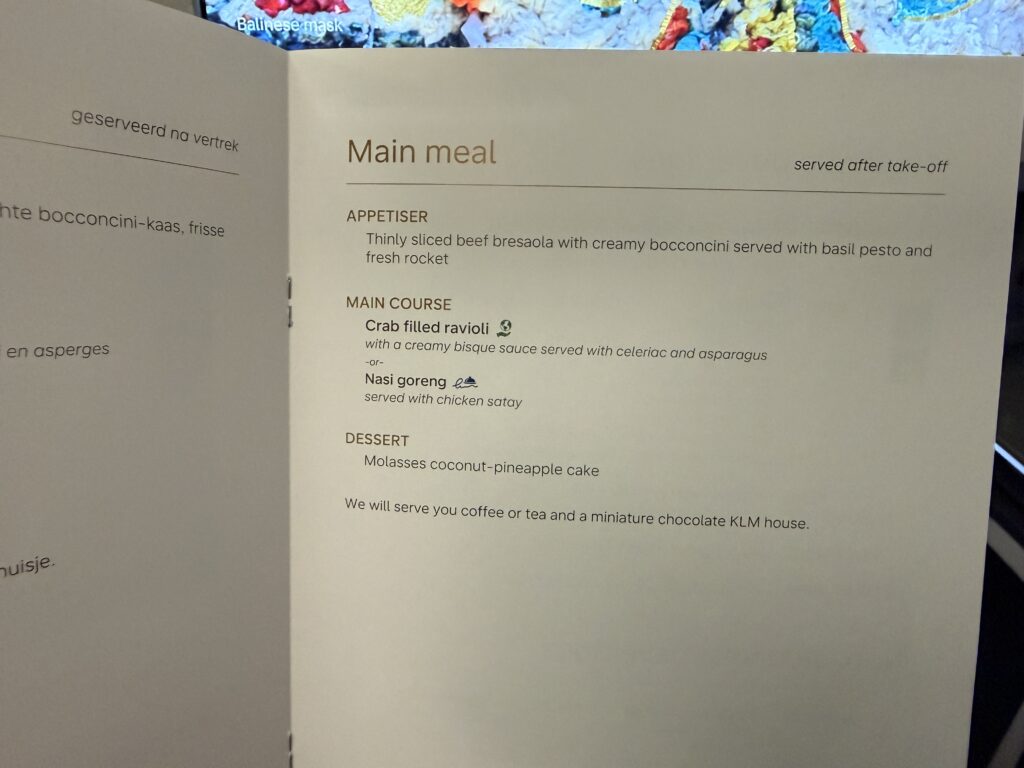
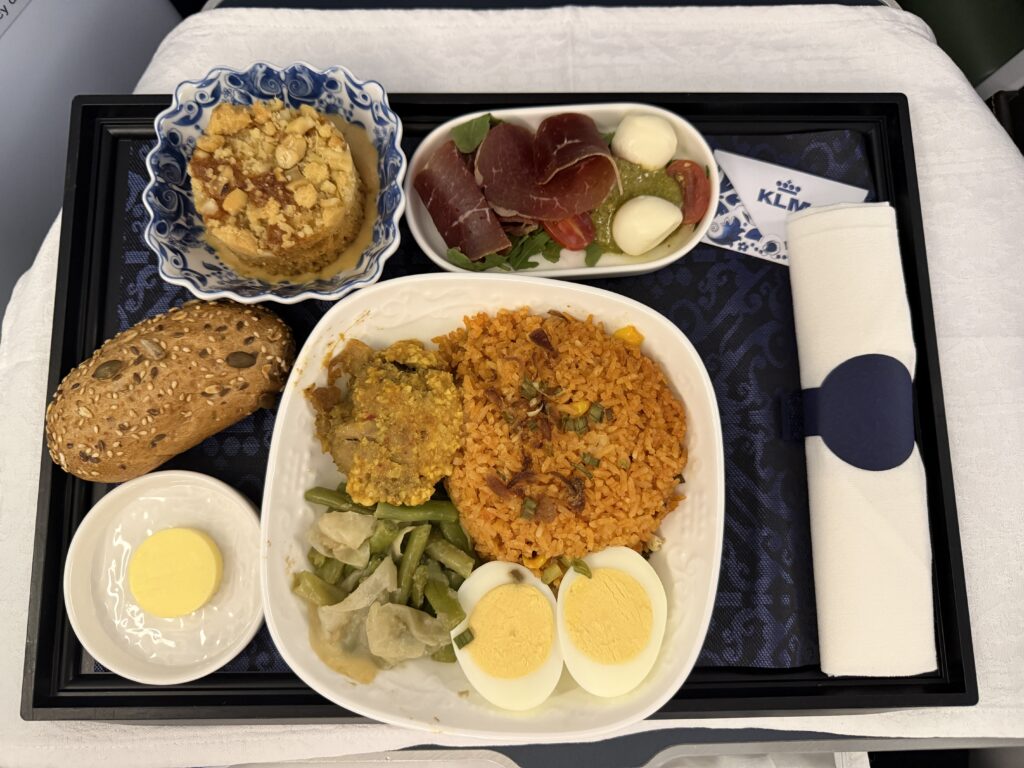
My experience: For a flight lasting approximately two and a half hours, I was pleasantly surprised by the quality of the meal service. KLM provided a printed menu with two main-course options: crab-filled ravioli or nasi goreng with chicken satay. I opted for the nasi goreng, which was served alongside an appetizer, bread, and dessert. The food was good, the portions were generous for such a short flight, and the overall presentation felt more like a long-haul business class experience than a quick regional journey.
The flight attendants were equally impressive. Throughout the flight, they were friendly, professional, and attentive, regularly checking whether I needed another drink and promptly clearing my tray once I finished eating. The service never felt rushed, despite the relatively short flight time. Between the quality of the food and the attentiveness of the crew, the dining experience was one of the highlights of the flight.
- The business class menu on KLM flight KL835 offered a choice between crab-filled ravioli and nasi goreng with chicken satay, followed by coconut-pineapple cake.
- KLM’s business class meal on flight KL835 from Singapore to Bali, featuring nasi goreng with chicken satay, an appetizer, bread, and dessert.
Is Better Food Worth Paying for Business Class?
On its own, absolutely not. Even an excellent airline meal has a relatively limited monetary value compared with the price difference between economy and business class.
The better way to evaluate it is as one component of the overall experience.
The seat, food, service, baggage benefits, and airport experience all contribute to what you’re receiving.
Individually, some of those benefits may seem insignificant. Together, they can create a noticeably better journey. The question is whether that improvement is worth the additional cost.
The Cost: 25,000 Points for KLM Business Class
I booked this flight using 25,000 Virgin Atlantic Flying Club points, plus taxes and fees. Rather than redeeming miles directly through KLM’s Flying Blue program, I used Virgin Atlantic’s loyalty program to book a partner airline.
This is possible because Virgin Atlantic and KLM are both members of the SkyTeam alliance, and Virgin Atlantic provides eligible KLM award redemptions. This is also an example of why understanding airline partnerships can be valuable.
You don’t necessarily need miles in an airline’s own loyalty program to book its flights. Sometimes, a partner program offers a more attractive redemption option. However, award pricing and availability can differ significantly between programs, so comparing your options is important.
What Was My Redemption Actually Worth?
To calculate the cents-per-point value, we need to compare the cash price of the ticket with the points redeemed and any additional taxes or fees.
The formula is (Cash Ticket Price − Award Taxes and Fees) ÷ Points Redeemed × 100. For example, suppose the business-class ticket costs $500 in cash, and the award requires 25,000 points plus $50 in taxes.
The calculation would be ($500 − $50) ÷ 25,000 × 100 = 1.8 cents per point. That’s the theoretical redemption value.
However, just because a business-class ticket costs $500 doesn’t mean you personally received $500 of value.
Understanding the difference between a mile’s theoretical redemption value and its practical value is important when deciding whether to book an award ticket. We explore this further in our guide to How Much Are Airline Miles Worth?.
If you would have otherwise purchased a $150 economy ticket, the practical value of the redemption may be considerably different.
For my actual booking:
- Points redeemed: 25,000 Virgin Atlantic Flying Club points
- Taxes and fees: $51.06 USD
- Comparable KLM business-class cash fare: $422
- Comparable economy cash fare: $152 (Economy with 1 checked bag), $196 (Premium Comfort with 2 checked bags)
- Calculated redemption value: 1.48 cents per point
Is 1.48 cents per point a slam-dunk redemption, especially for a flight lasting just over two hours? Not necessarily. But there’s a difference between maximizing the mathematical value of your points and maximizing the value of the experience.
Personally, I valued this flight much more than the numbers might suggest. Flying a long-haul Boeing 777 business class product on such a short route isn’t something you get to experience every day. Between the lie-flat seat, onboard dining, and attentive service, this was an experience I was willing to spend extra points on.
What made it even more appealing was that this was a Fifth Freedom flight. As an aviation enthusiast, there’s something particularly interesting about flying a Dutch airline between Singapore and Indonesia, rather than to or from its home country. It’s a relatively unusual opportunity to experience an international airline’s long-haul product on a short regional route. From an AvGeek perspective, that made the redemption even more worthwhile to me.
There was also another factor in my decision. I had Virgin Atlantic Flying Club points available from a previously canceled award booking, with no immediate plans to redeem them elsewhere. Rather than leave those points sitting unused and exposed to potential future devaluations, I decided to put them toward an experience I genuinely wanted.
Could I have saved the points for a redemption offering a higher CPP? Absolutely. But points only have value when you use them, and for me, the opportunity to experience KLM’s long-haul business class on a Fifth Freedom route was worth more than squeezing out a few extra tenths of a cent per point.
The takeaway: This wasn’t necessarily the most financially efficient redemption, but it was one I was happy to make. Sometimes the best use of points isn’t the one with the highest CPP—it’s the one that delivers the experience you actually value.
How Does KLM Business Class Compare With Other Airlines Flying Singapore to Bali?
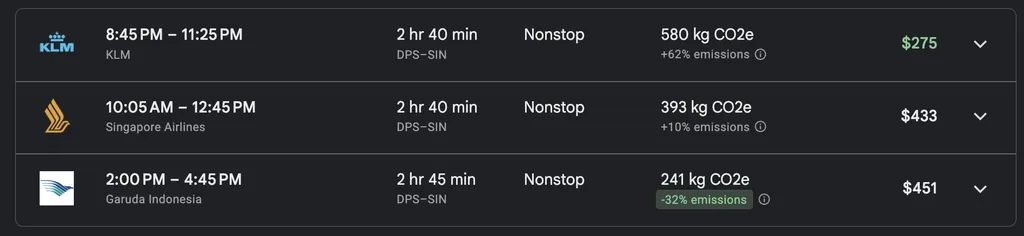
KLM isn’t the only airline connecting Singapore and Bali. Travelers can also consider airlines such as Singapore Airlines, Garuda Indonesia, and other carriers depending on the date and schedule. The important thing is that these airlines don’t all offer the same experience.
Some operate narrowbody aircraft with conventional regional seating, while others may offer widebody aircraft or different premium-cabin configurations.
Aircraft assignments can change, so comparing airline names alone isn’t enough. However, oddly enough, KLM’s widebody 777 business class fares come in at a much lower price point.
Business Class Versus Economy
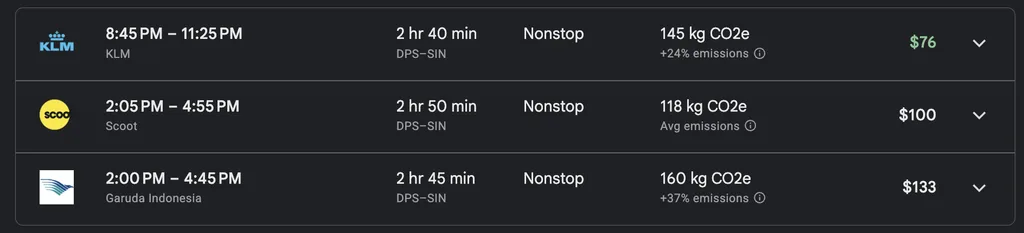
For a flight this short, economy class deserves serious consideration. If you’re flying during the day, have minimal baggage, and don’t particularly care about the premium experience, an economy ticket may provide everything you need.
After all, the flight duration is the same. A business-class ticket doesn’t get you to Bali significantly faster once you’re in the air. What it can provide is a more comfortable experience before and during the flight.
A traveler might willingly spend an additional $100 or $150 for more comfort but hesitate to spend 25,000 valuable points for the same improvement.
How Much Are You Paying for Each Hour of Comfort?
One useful way to evaluate a premium-cabin purchase is to calculate the additional cost per flight hour. Imagine economy costs $150 and business class costs $450.
That’s a $300 premium, and on a 2.5-hour flight, you’re effectively paying:
$300 ÷ 2.5 hours = $120 per flight hour
Would you spend $120 per hour for a more comfortable seat, upgraded service, and the associated premium benefits?
Some travelers would, especially if the flight is part of a special trip. Others would rather put that money toward a better hotel, dinner, or experience at their destination.
The important thing is recognizing the tradeoff.
Was KLM’s Fifth Freedom Business Class Worth 25,000 Points?
This is where I separate two different questions.
Was the experience worth having?
And:
Was using 25,000 points the best way to pay for it?
Those aren’t necessarily the same thing. As an aviation enthusiast, there’s something appealing about flying a Dutch airline between Singapore and Indonesia.
The route itself is unusual, the aircraft is designed for long-haul travel, and the opportunity to experience KLM’s World Business Class on a short flight adds another dimension to the journey.
But from a strictly financial perspective, 25,000 points isn’t an insignificant amount.
Those points could potentially be used toward another flight, a longer premium-cabin redemption, or a future trip where the additional comfort provides greater practical value.
That’s the opportunity cost.
When I Would Consider Booking This Flight
KLM’s fifth freedom business class is worth considering when the premium over economy is reasonable, you value the specific aircraft and cabin, or the flight fits conveniently into your itinerary.
It may also make sense when you have a points balance that you want to use and the alternative redemption opportunities aren’t particularly compelling.
However, I would be more hesitant if the award requires a substantial number of points compared with inexpensive economy tickets, especially when the flight is short and operates during the day.
A lie-flat seat is a great feature, but the amount of time you have to enjoy it matters.
The Final Verdict
Would I book KLM’s KL835 business class again for 25,000 Virgin Atlantic points? Probably not, at least not under the same circumstances.
As much as I enjoyed the experience, I tend to take a more practical approach when evaluating flight redemptions. As this KLM business class review demonstrates, a premium cabin can deliver a memorable experience without necessarily representing the strongest redemption value. Given the relatively short flight duration, competitive economy fares, and a redemption value of just 1.48 cents per point, I would have been perfectly comfortable flying economy and saving those points for another trip.
That doesn’t mean I regret the redemption. Quite the opposite. The lie-flat seat, quality dining, and attentive cabin crew exceeded what I would normally expect from a flight of this length. Combined with the novelty of flying a Fifth Freedom route, it was an experience I genuinely enjoyed and one I’m glad I had the opportunity to try.
What makes KLM particularly interesting is that its cash fares can already be competitive against other airlines operating between Singapore and Bali. That makes the route worth considering even without redeeming miles, especially for travelers looking to experience a long-haul aircraft on a short regional flight.
Would I fly KL835 again? Absolutely. However, I’d likely book economy next time unless business class was available at a particularly attractive cash price or redemption rate. I’d also be interested in exploring Singapore Airlines, Garuda Indonesia, or other carriers on the route to compare their onboard experiences.
Ultimately, this flight reinforced something I believe strongly at The Fare Theory: a redemption doesn’t have to deliver the highest possible cents-per-point value to be worthwhile, but that doesn’t mean it’s worth repeating. Sometimes paying a premium for a unique experience makes sense. Once you’ve had that experience, the calculation can change.
For me, KLM’s Fifth Freedom business class was worth trying once. The next time, I’d let the price, schedule, and opportunity to experience something new guide my decision.
The broader lesson is that fifth freedom flights can create genuinely interesting travel opportunities, particularly when airlines operate long-haul aircraft on shorter international routes.
But a unique airline experience and a valuable points redemption aren’t automatically the same thing. Sometimes, spending extra miles makes sense because the experience itself is part of the vacation.
Other times, those points are better saved for a flight where the comfort makes a more meaningful difference.
At The Fare Theory, that’s the distinction worth understanding.
Points are renewable. Time is not.