I Got a Free First Class Upgrade. It Barely Mattered.
Getting upgraded to First Class is supposed to be one of the best parts of having airline status. On a recent flight from Newark to Richmond, it happened to me.
My upgrade cleared. I moved to the front of the plane. I had a wider seat, more space, and the satisfaction of seeing my name finally making it to the right side of the upgrade list.
There was just one problem:
The flight was barely an hour long.
By the time we climbed out of Newark, the flight attendants began service, and I had a few minutes to settle in, we were already preparing to descend into Richmond.
- Was First Class better than Economy? Considerably.
- Did it meaningfully change my trip? Not at all.
And that got me thinking about one of the benefits airlines frequently associate with elite status: a complimentary airline upgrade.
On paper, they sound incredibly valuable. Fly enough, earn status, and occasionally get moved into a cabin that other passengers paid hundreds of dollars more to sit in.
But the value of an upgrade isn’t determined by the cabin name alone.
It depends on where, when, and for how long you’re actually getting upgraded.
A First Class upgrade on a 60-minute regional flight and a premium-cabin upgrade on a five-hour transcontinental flight might both technically be “upgrades.” The experiences aren’t remotely equivalent.
And there’s another complication.
The flights where premium seating can matter most, longer flights where additional space, better service, or a more comfortable seat can genuinely improve the journey, can also be the flights where you’re competing with plenty of other elite travelers for a limited number of premium seats.
So the real question isn’t whether free upgrades are nice. Of course they are.
It’s whether a complimentary airline upgrade is valuable enough, consistently enough, to justify chasing airline status in the first place.
My Newark-to-Richmond upgrade provided a pretty good place to start.
My First Class Upgrade Was Worth Less Than It Looked
It’s tempting to calculate the value of a complimentary airline upgrade by looking at what the First Class ticket would have cost.
But suppose you paid $250 for Economy while First Class was selling for $500. Your upgrade could theoretically look like a $250 benefit.
But did you actually receive $250 worth of value?
That’s a much harder question.
If you never would have spent an additional $250 for First Class on a one-hour flight, treating the difference between the two fares as money you “saved” exaggerates what the upgrade was actually worth to you.
A better question is:
How much would I personally have paid to upgrade this flight?
Maybe the answer is $100, maybe it’s $50, and maybe you wouldn’t have paid anything. That number provides a much more realistic way to think about the value elite status is providing.
In my case, the upgrade worked exactly as advertised. But the flight so short that the incremental improvement over Economy simply wasn’t particularly meaningful.
Even in the days leading up to departure, the first class upgrade offer was $120, and having flown this similar route many times, there was absolutely no chance I would take this offer. United’s airline upgrade list had me listed as #3 with seven seats available, meaning there would be a very good chance I cleared.

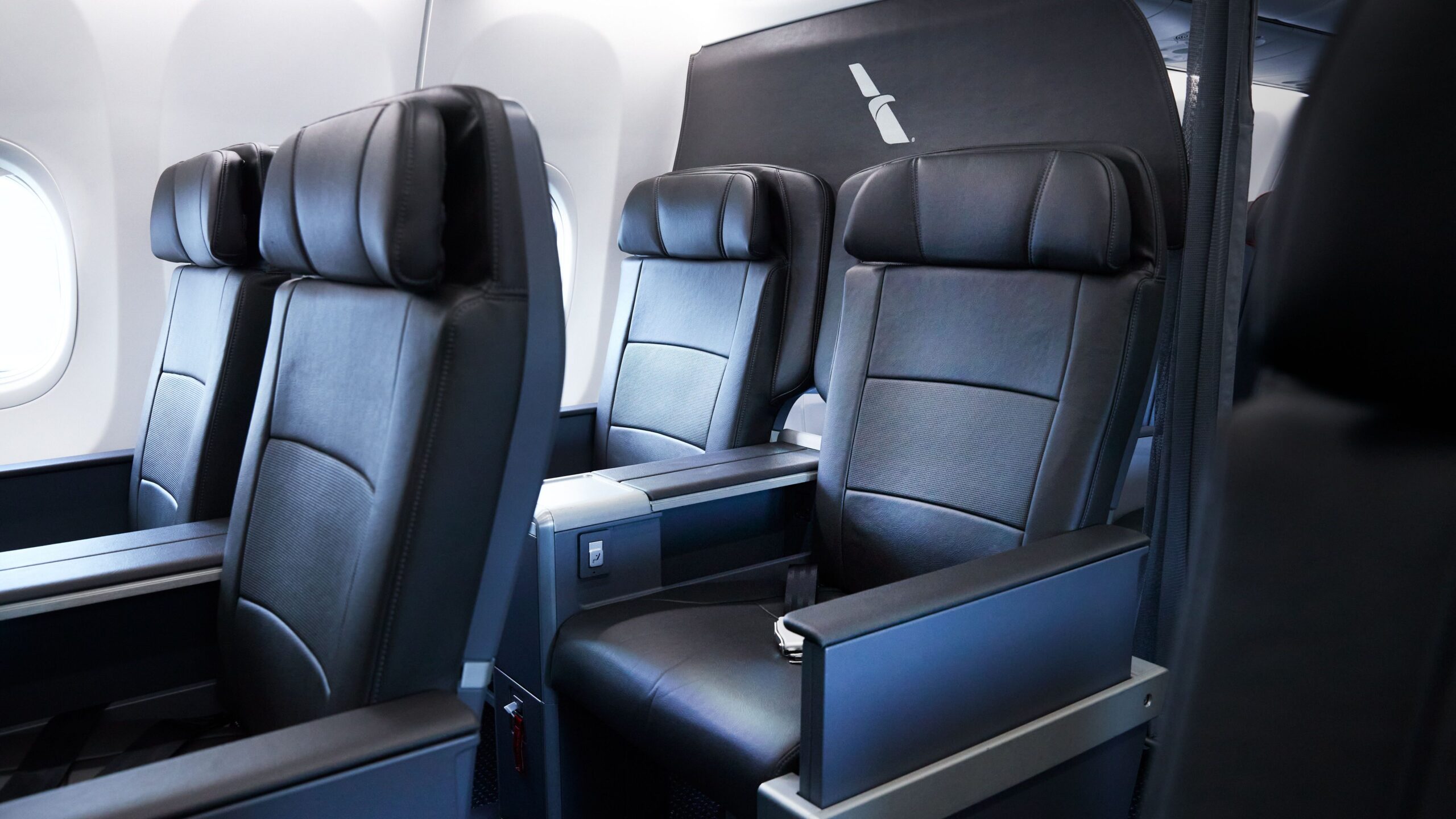
The aircraft I was flying on was an Embraer E175, which has a domestic First Class cabin with larger seats, more legroom, and a 1-2 configuration instead of the 2-2 layout in Economy. I was already in It’s unquestionably the better place to sit compared to economy.
But this was still Newark to Richmond.
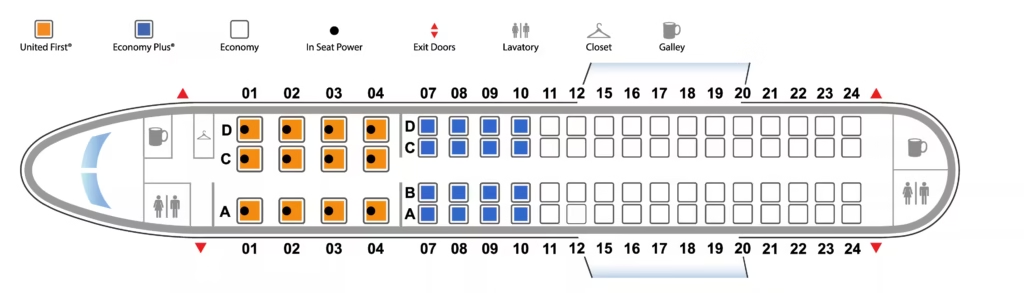
How much was I really willing to pay for a better seat for roughly an hour?
Certainly not $120.
That’s where the difference between the retail value of an upgrade and its personal value becomes important. United could price the upgrade at $120, $200, or more. That doesn’t mean I received that much value when it cleared for free.
The complimentary upgrade was nice. It just wasn’t worth very much to me. The only true difference I received was a larger seat and an illy Cold Brew coffee, that would have otherwise cost $6.
And that distinction becomes important when travelers start assigning hundreds or even thousands of dollars of theoretical value to airline status.
Not All Complimentary Airline Upgrades Are Equally Valuable
That experience also highlighted something that’s easy to overlook when talking about elite status: an upgrade isn’t a standardized unit of value.
Getting moved from Economy to First Class sounds valuable regardless of the flight. But the amount of value you actually receive depends heavily on where you’re going, how long you’ll be onboard, and how different the premium cabin is from the seat you would have otherwise occupied.
On Newark to Richmond, my upgrade meant a wider seat, more legroom, and a more comfortable ride. Those are all genuine benefits. But on a flight that spends relatively little time at cruising altitude, there simply isn’t much time to enjoy them.
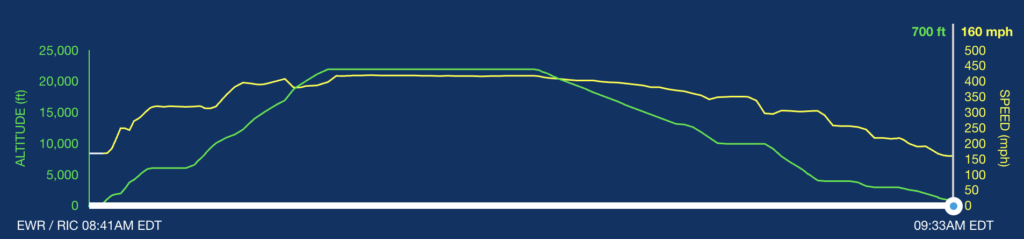
Compare that with a four-, five-, or six-hour flight.
Suddenly, an extra few inches of space matters more. A larger seat matters more. Food and beverage service matters more. The ability to work comfortably, or simply arrive less fatigued, starts to have real value.
The longer you’re exposed to the better product, the more opportunity there is for that product to improve your trip.
That’s why I’d rather have one meaningful upgrade on a five-hour flight than several upgrades on one-hour regional hops.
Technically, my elite status delivered the same benefit in both cases: a complimentary airline upgrade to First Class.
In practice, the value isn’t remotely the same.
The Flights Where Upgrades Matter Most Can Be the Hardest to Get
This creates an interesting problem with complimentary upgrades. The flights where an upgrade matters least can sometimes be perfectly pleasant places to receive one.
But they’re not necessarily the flights driving your desire for status.
If you’re going to spend several hours on an airplane, that’s when extra space becomes considerably more valuable.
- A wider seat matters more after several hours.
- Additional legroom matters more.
- Better food and service have more time to matter.
And depending on the aircraft and route, a substantially better premium seat can transform the journey. Those are the upgrades travelers tend to imagine when thinking about elite status.
But there is no guarantee those are the upgrades they’ll actually receive.
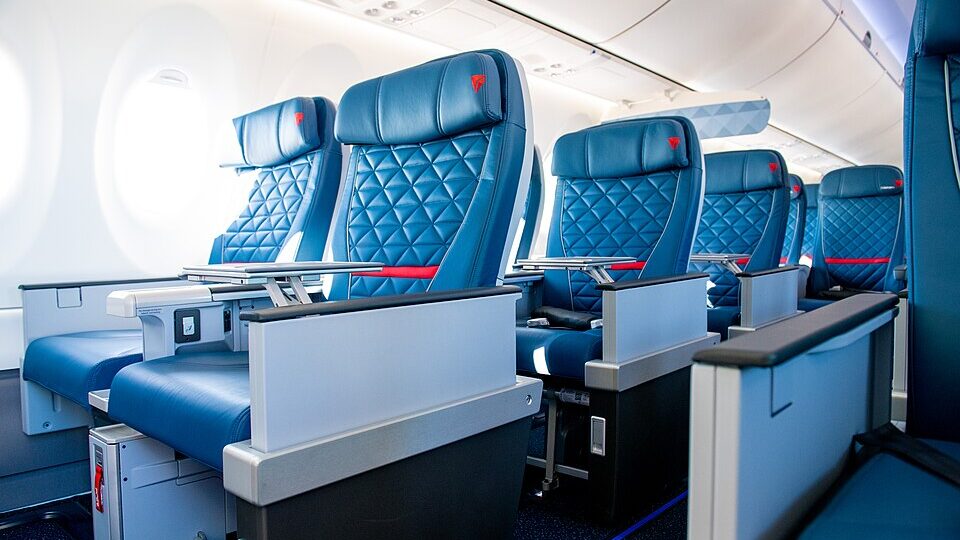
Premium demand varies dramatically by route, departure time, airport and travel pattern. You’re also competing with other eligible travelers, while the airline is simultaneously trying to sell those premium seats. United, for example, offers Complimentary Premier Upgrades (CPUs) to Premier members on eligible flights, but an upgrade isn’t guaranteed simply because you have status.
On top of that, your status determines when that process can begin. Premier 1K members can clear as early as 96 hours before departure, followed by Premier Platinum at 72 hours, Premier Gold at 48 hours and Premier Silver on the day of departure. But those windows are opportunities for an upgrade to clear, not promises that one will.
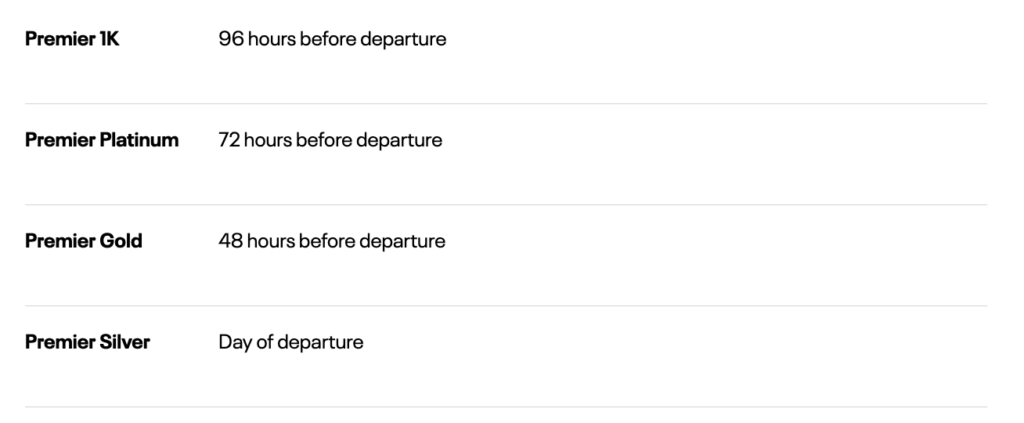
That creates an awkward relationship between upgrade probability and upgrade value. The upgrade you want most isn’t necessarily the upgrade you’re most likely to receive. For someone deciding whether to pursue airline status, that’s a distinction worth considering.
Airlines Have More Ways to Sell First Class Before Giving It Away
There’s another reason travelers should be careful about treating complimentary upgrades as guaranteed value.
An empty First Class seat is inventory.
And airlines have increasingly sophisticated ways to monetize that inventory.
- They can sell the seat as part of a First Class ticket.
- They can offer an Economy passenger a paid upgrade.
- They can potentially offer premium inventory through miles or other loyalty mechanisms.
- They can adjust the price as departure approaches.
Only after the airline has made its revenue-management decisions does complimentary upgrade availability ultimately become relevant. From the airline’s perspective, that makes sense.
A premium seat that can still generate incremental revenue has economic value. Giving that seat away too early eliminates the possibility of selling it later. For the elite traveler, however, this means seeing open First Class seats when booking doesn’t necessarily mean those seats will eventually become complimentary upgrades.
Inventory can change considerably before departure.
That’s why I wouldn’t value status by imagining every empty premium seat as a future upgrade.
Until the upgrade clears, you still have an Economy ticket.
A Complimentary Airline Upgrade Shouldn’t Be the Main Reason You Chase Status
None of this means complimentary upgrades are worthless…far from it actually.
Getting moved to First Class without paying anything additional is objectively better than staying in Economy, assuming you prefer the premium seat. But there’s a difference between appreciating an upgrade and building your entire airline-status strategy around receiving them.
Other elite benefits can be considerably more predictable.
- Free checked bags can have an easily identifiable value.
- Preferred or extra-legroom seating can improve flights even when an upgrade doesn’t clear.
- Priority check-in, security or boarding can save time.
- Higher priority during disruptions may become particularly valuable when something goes wrong.
Those aren’t as exciting as seeing “FIRST CLASS” appear on a boarding pass.
But predictable benefits can sometimes be more valuable than theoretically larger benefits you receive inconsistently.
That’s why the question “Is Airline Status Worth It?” should extend beyond upgrades entirely.
If you’d still value your status during a year when you received very few complimentary upgrades, that’s a much stronger indication that the status itself fits the way you travel.
If the entire value proposition falls apart without First Class upgrades, you may be placing too much value on something you don’t control.
Don’t Confuse the Retail Price With the Value You Received
This is the same mistake travelers often make when valuing points and miles. Suppose First Class costs $700 while your Economy ticket costs $300.
You receive a complimentary upgrade.
It’s easy to say:
“My status just saved me $400.”
But that statement assumes you otherwise would have purchased the $700 ticket. If you never would have done that, you didn’t really save $400. Instead, ask yourself what you would have paid at the gate if the airline had offered you the upgrade.
Would you pay $250? $100? $40?
Maybe you wouldn’t pay anything and that’s your personal valuation. However, it can change dramatically depending on the flight.
I might place very little incremental value on First Class for a short hop. Put me on a significantly longer flight where comfort affects several hours of my day, and suddenly I may be willing to pay considerably more.
Same elite benefit.
Completely different value.
A Better Way to Value Complimentary Upgrades
Rather than assigning a huge theoretical number to complimentary upgrades when deciding whether status is worthwhile, I’d evaluate them using three questions:
- How often do I realistically clear upgrades on the routes I actually fly?
- How much better is the premium product on those flights?
- What would I genuinely have paid for each upgrade?
That last question is especially important.
Imagine you receive six upgrades over the course of a year.
If you realistically would have paid about $50 for each one, you’ve received roughly $300 of personal upgrade value. That’s very different from adding up the published fare difference and claiming your status delivered $2,000 or $3,000 in benefits.
The second calculation looks better.
The first is probably more useful.

And if maintaining status requires spending substantially more money, choosing less convenient flights, taking unnecessary trips, or paying more to remain loyal to one airline, the economics can quickly move in the wrong direction.
Status should make the travel you’re already doing better.
It shouldn’t require manufacturing travel just to unlock benefits you hope you’ll eventually receive.
The Fare Theory: Value the Upgrade You Actually Receive
My flight from Newark to Richmond didn’t convince me that complimentary upgrades are pointless, but it did reinforce something more important:
The word “upgrade” doesn’t tell you how valuable the upgrade actually was.
I received First Class and enjoyed it. If given the choice between sitting in Economy and sitting in First for the same price, I’m taking First every time.
But I also wasn’t going to pretend that spending roughly an hour toward the front of an airplane fundamentally changed my trip.
And that’s the framework I’d use when evaluating airline status.
- Don’t value the imaginary transcontinental upgrade you might receive someday.
- Don’t automatically use the retail difference between Economy and First.
- Don’t assume ten upgrades necessarily mean you extracted enormous value from status.
Instead:
- Look at the flights you actually took.
- Look at the upgrades you actually received.
And ask what you honestly would have paid for them.
Because ultimately, elite status shouldn’t be valued based on the upgrades you imagine receiving. It should be valued based on the benefits you’re realistically likely to use.