What Are Fare Buckets? The Essential Guide to Airline Pricing
How Do Airline Fare Buckets Work?
Have you ever searched for a flight, waited a few hours, refreshed the page, and found the price had increased?
Many travelers assume the airline simply “raised the fare.” but that’s not always what happened. In many cases, the cheaper fare simply sold out.
Behind every flight is an inventory system known as fare buckets, arguably one of the most important concepts for understanding how airlines price flights.
Understanding fare buckets helps explain why airfare changes so frequently and why two passengers sitting next to each other often paid completely different prices.
Airlines Don’t Sell Every Seat at the Same Price
Imagine a Boeing 737 with 175 seats. Most travelers assume the airline has one set price across the different cabins and prices will change depending on the date and time to departure.
That’s partly true, but there’s one big factor missing from that assumption…in reality, the cabin is divided into multiple pricing buckets.
This is one reason flights can become more expensive even when plenty of seats remain available. The airline hasn’t necessarily raised the price of every seat, the cheaper inventory may simply no longer be available.
If we think about just Economy cabin as an example:
| Fare Bucket | Available Seats | Price |
|---|---|---|
| G | 8 | $189 |
| V | 12 | $229 |
| K | 20 | $279 |
| L | 25 | $339 |
| S | 30 | $399 |
| Y | Remaining | $649 |
These aren’t physical sections of the airplane and everyone may sit in the exact same Economy cabin.
However, the difference is simply the fare they purchased.
What Exactly Are Fare Buckets?
Simply put, fare buckets are an inventory category that represents:
- A specific price
- A specific set of fare rules
- A limited number of seats
Typically, fare buckets are identified by a booking class letter, with higher buckets generally offering more flexibility at higher prices and lower buckets offering steeper discounts with more restrictions.
The simplified example below illustrates how fare buckets are typically organized. While the exact letters, prices, and rules vary by airline, the underlying concept is the same:
Airlines sell the same seat at different prices based on inventory, demand, and fare conditions.

Although airlines often use similar letters, there is no universal industry standard. A booking class can mean different things depending on the airline.
Think of Airline Fare Buckets Like a Hotel
One of the easiest ways to understand airline fare buckets is to think about how a hotel prices its rooms.
Imagine a hotel with 100 identical rooms. Instead of selling every room for $200 per night, the hotel might offer its inventory across several price levels:
- 10 rooms at $149
- 20 rooms at $179
- 30 rooms at $219
- 40 rooms at $269
Early guests receive the lowest available prices, while later guests often pay more because the cheapest inventory has already been sold.
Airlines use the exact same pricing strategy.
Although every economy seat may look identical, airlines divide them into multiple fare buckets (also called booking classes). Each fare bucket has its own price, availability, and fare rules. As lower-priced fare buckets sell out, only higher-priced inventory remains for future customers.
Why Flight Prices Suddenly Jump
One of the most common questions travelers ask is:
“Why did my flight price increase overnight?”
In many cases, the answer has nothing to do with fuel prices, demand spikes, or the airline changing its pricing strategy.
Instead, a fare bucket sold out. Imagine there are only two seats remaining in the V fare bucket priced at $280. One traveler purchases a ticket. Then another traveler books the final available seat. At that moment, the V fare bucket is exhausted. The next available inventory might be the Q fare bucket, priced at $340.

The airplane hasn’t changed, the seat is identical and the departure time is the same. The only thing that changed is which fare bucket still has inventory available.
This is one of the primary reasons airfare can jump by hundreds of dollars seemingly overnight. The airline didn’t raise the price of every seat, it simply sold all of the seats available at the lower fare.
Airline Fare Buckets Constantly Change
Another common misconception is that airline fare buckets only move upward as a flight fills. In reality, airline inventory is far more dynamic.
Revenue management teams continuously monitor booking trends, competitor pricing, seasonality, cancellations, and demand forecasts.
If a flight is selling slower than expected, an airline may reopen lower-priced fare buckets to stimulate demand and encourage more bookings.
If bookings are stronger than forecast, those lower-priced fare buckets may close weeks, or even months, before departure. In other words, fare buckets are constantly being adjusted.

They aren’t fixed price levels that disappear forever. Instead, airlines use sophisticated revenue management systems to decide how much inventory should be available in each fare bucket at any given moment.
This is why two travelers searching for the same flight just hours apart may see completely different prices. They’re not necessarily looking at different seats—they’re looking at different fare bucket inventory.
Can You See Fare Buckets?
The answer varies, but on some airlines, you actually can!
United Airlines offers a feature called Expert Mode that lets travelers view available booking classes on a flight. By expanding the flight details, you can see which fare classes such as Y, B, M, H, Q, or K, are currently open for sale.
With Expert Mode enabled, frequent flyers can also view inventory availability within those fare buckets, offering a rare look into the airline’s revenue management system. It’s one of the few ways travelers can see airline pricing strategy in action before booking.
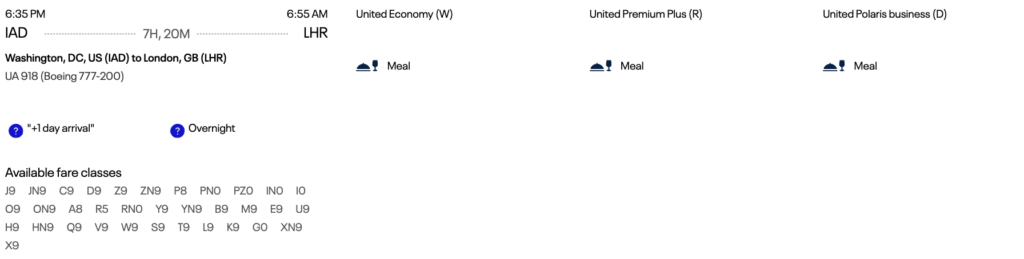
This doesn’t tell you exactly how many seats are left on the aircraft. It is a way for customers to know which fare buckets still have inventory available and, with Expert Mode enabled, how much inventory remains in many of those booking classes.
For travelers interested in airline pricing, it’s one of the best ways to see revenue management at work.
The Bigger Picture
Fare buckets aren’t designed to confuse travelers….they’re designed to maximize revenue.
Every flight has travelers with different budgets, different levels of urgency, and different willingness to pay.
Rather than charging everyone the same price, airlines divide inventory into dozens of pricing categories and sell each seat at the highest price the market will support.
That’s why two passengers sitting side by side can pay vastly different fares for the exact same flight.
The Fare Theory
Airlines don’t price airplanes.
They price inventory.
Fare buckets are the mechanism that allows airlines to sell identical seats at different prices while responding to changes in demand in real time.
Understanding fare buckets won’t guarantee you always find the cheapest fare.
But it will help you understand why airfare changes—and why pricing often has less to do with the seat itself than the inventory category you’re buying.