Is Premium Economy Worth It? 10 Things to Consider
Premium Economy occupies an awkward place in air travel.
It’s noticeably better than Economy, but usually nowhere near Business Class. You get more space, a better seat, improved meals on many airlines, and sometimes priority airport benefits.
But you also might pay hundreds, or even more than $1,000, above the price of an Economy ticket.
So, is Premium Economy worth it?
Sometimes, absolutely. Other times, you’re paying a surprisingly large premium for a few extra inches of space.
The answer depends less on whether Premium Economy is “better” than Economy, as it certainly can be, and more on how much the upgrade costs, how long you’ll actually benefit from it, and what you’re getting for the additional money.
Here’s how to decide.
What Is Premium Economy?
Premium Economy is a separate cabin positioned between Economy and Business Class.
It shouldn’t be confused with products like Economy Plus, Comfort+, Main Cabin Extra, or other extra-legroom Economy seats.
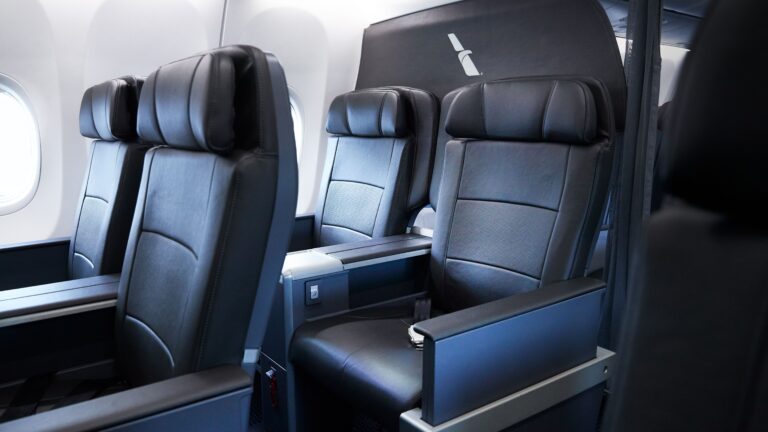
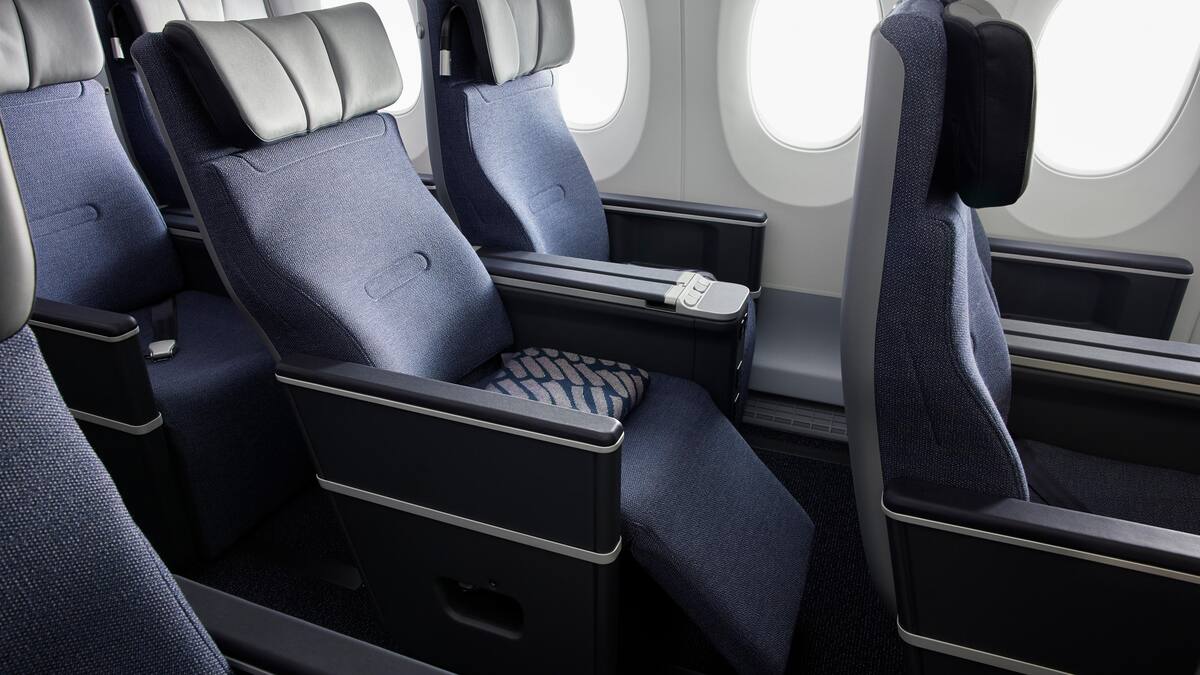
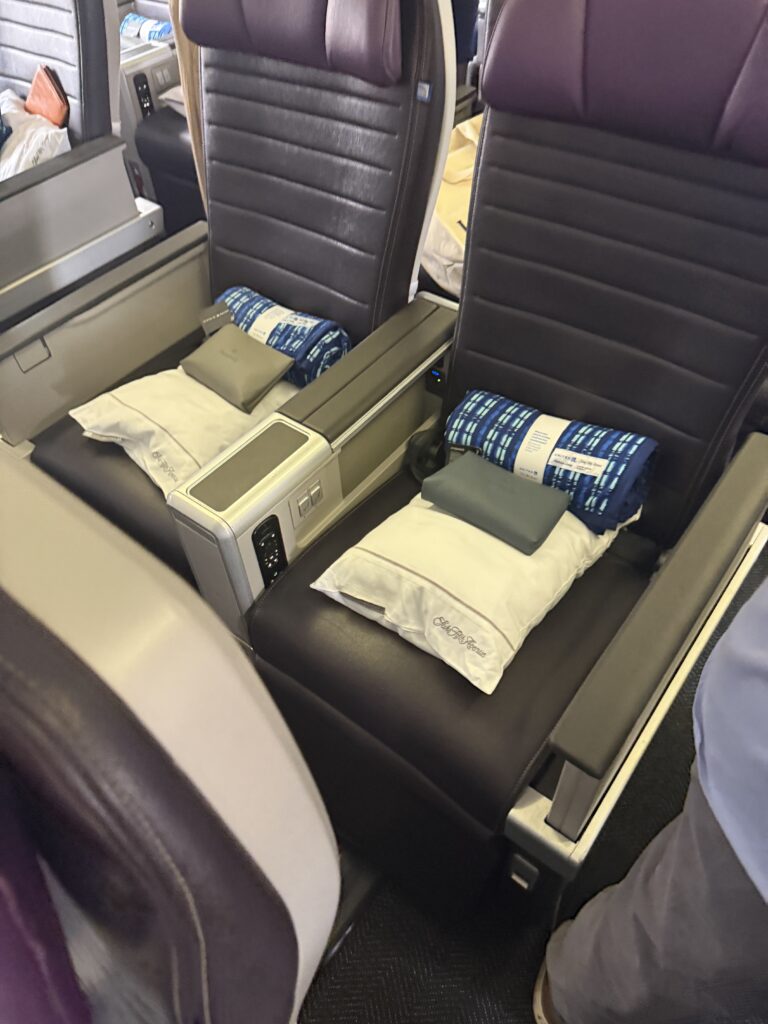
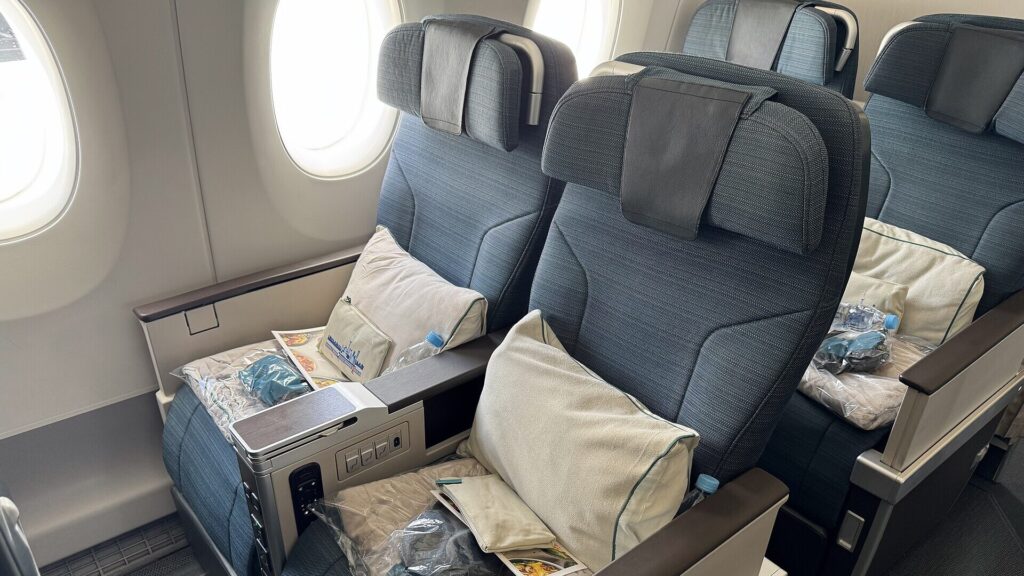
True Premium Economy typically offers a physically different seat and a noticeably different onboard experience, with airlines such as American Airlines offering wider seats, more legroom and additional onboard amenities.
Depending on the airline, that can include:
- Wider seats
- More legroom
- Greater recline
- Larger entertainment screens
- Improved meals
- Better bedding or amenities
- Dedicated cabin service
- Priority check-in or boarding
- Increased baggage allowances
The exact experience varies considerably between airlines.
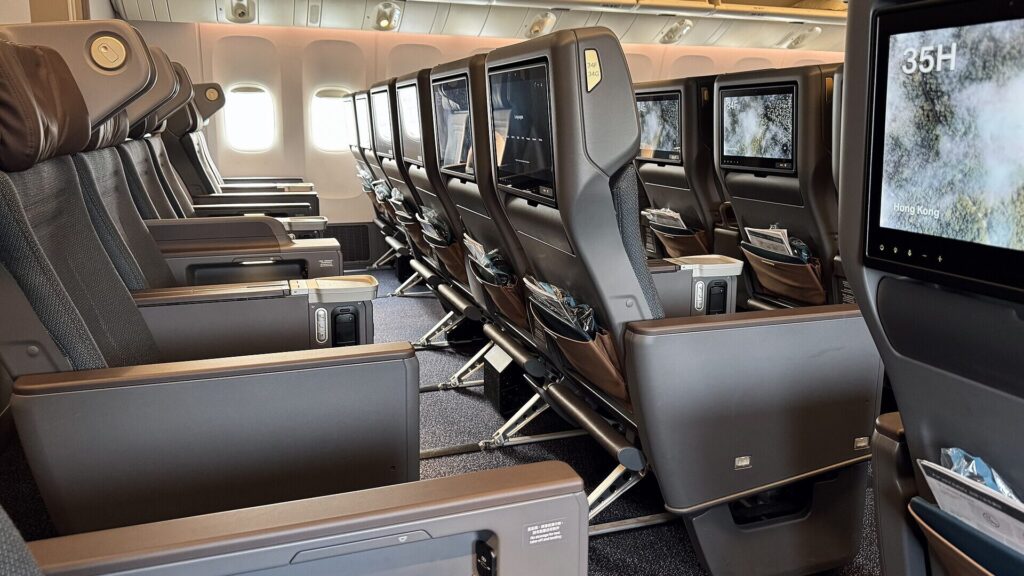
But the biggest difference is usually the seat.
Economy seats on long-haul aircraft commonly have relatively tight legroom and limited recline. Premium Economy generally gives you additional personal space, a wider seat and greater separation from the passenger in front of you.
On an eight-, ten-, or fourteen-hour flight, those differences can become meaningful.
The question is how much you should pay for them.
Is Premium Economy Worth It?
The easiest mistake is looking at the Premium Economy experience without considering its price.
Imagine you’re flying from New York to Paris.
You find:
Economy: $750 round trip
Premium Economy: $1,250 round trip
Business Class: $3,200 round trip
Premium Economy costs an additional $500.
That’s one decision…now imagine the same flights cost:
Economy: $750
Premium Economy: $2,000
Business Class: $3,200
That’s partly because airlines don’t price every cabin according to a simple cost-plus formula. Pricing reflects demand, available inventory and what travelers are willing to pay.
That’s why asking “Is Premium Economy worth it?” without looking at the price doesn’t really make sense.
A better question is:
Is Premium Economy worth the upgrade cost on this particular flight?
To answer that, there are several things worth considering.
1. How Much More Does Premium Economy Cost?
Start with the simplest calculation:
Premium Economy price – Economy price = Premium Economy upgrade cost
If Economy costs $800 and Premium Economy costs $1,200:
$1,200 – $800 = $400
You’re not deciding whether a $1,200 Premium Economy ticket is worth buying. You’re deciding whether the incremental experience is worth $400.
Example
Suppose you’re choosing between:
| Cabin | Round-Trip Price |
|---|---|
| Economy | $850 |
| Premium Economy | $1,250 |
| Business Class | $3,400 |
Premium Economy costs $400 more than Economy. Business Class costs $2,150 more than Premium Economy. Suddenly, Premium Economy may look like a reasonable middle ground.
You’re buying additional comfort without paying anywhere close to the Business Class premium. But the calculation changes if Premium Economy costs $1,800.
Now you’re spending an additional $950 over Economy.
The seat didn’t improve, the price did. And value is always relative to price.
2. Consider the Cost Per Flight Hour
One of the easiest ways to evaluate whether Premium Economy is worth it is to divide the upgrade cost by the amount of time you’ll actually spend using it.
Suppose Premium Economy costs an additional $400 on a ten-hour flight.
That’s roughly $40 per flight hour.
Now consider a five-hour flight where the upgrade costs $600.
That’s $120 per flight hour.
The second upgrade may provide the same physical seat, but you’re paying three times as much for every hour you actually use it. This is the same reason I prefer evaluating airfare through the value of time rather than price alone.
This is why Premium Economy tends to become easier to justify as flights get longer. An extra six inches of legroom might not transform a three-hour flight.
But after twelve hours? You may value it very differently.
3. How Long Is the Flight?
Flight duration is one of the biggest factors in determining whether Premium Economy is worth the extra cost.
Short flights
On shorter routes, Premium Economy usually provides less value simply because you don’t have much time to enjoy the benefits.
Paying several hundred dollars for additional space on a four-hour flight can be difficult to justify.
Medium-haul flights
Once flights reach six to eight hours, the equation starts changing.
Additional recline, legroom and personal space become more meaningful — particularly on overnight flights.
Long-haul flights
On flights lasting ten or more hours, Premium Economy can become significantly more attractive.
Consider a flight from the United States to Asia. You’re not buying two hours of additional comfort. You could be buying 12–15 hours of it.
That’s a very different product.
4. Is It a Daytime or Overnight Flight?
Not all flight hours have equal value. Consider two eight-hour flights.
- One leaves at 10 a.m.
- The other leaves at 10 p.m.
On the daytime flight, you might watch movies, eat, read, work and stay awake for most of the journey. Economy might be perfectly manageable.
The overnight flight creates a different problem as you’re probably trying to sleep.
Premium Economy still doesn’t provide the lie-flat bed you’d get in Business Class, but additional recline, legroom, a footrest and a wider seat may make resting considerably easier.
That’s particularly relevant on eastbound transatlantic flights. Arriving exhausted can also affect the first day of your trip.
Which raises another question:
What is arriving better rested worth to you?
There isn’t one universal dollar amount, but there is a value.
5. Compare Premium Economy With Extra-Legroom Economy
This is one of the most overlooked comparisons. Your real decision isn’t always Economy vs. Premium Economy. It might actually be Extra-legroom Economy vs. Premium Economy
Taking the example below:
- Standard Economy costs $649.
- An extra-legroom Economy seat costs another $182.
- Premium Economy costs $2,490.
Your practical comparison becomes:
- Extra-legroom Economy: $831
- Premium Economy: $2,490
Now the true incremental cost is $1,659.
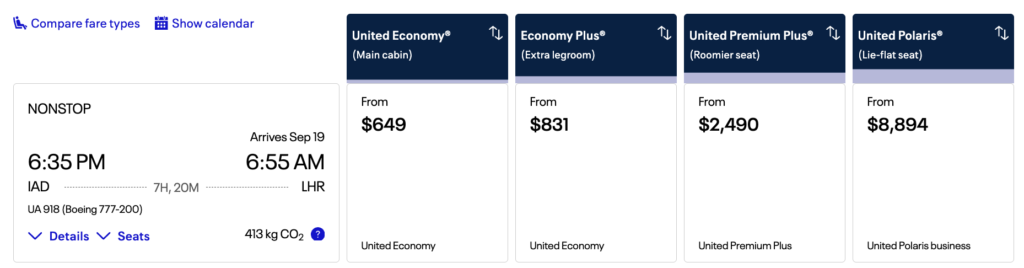
You need to decide whether the wider seat, additional recline, improved service and other Premium Economy benefits are worth another $1,659.
Sometimes it could be, but at the same time, sometimes an exit-row or extra-legroom Economy seat gives you most of what you personally care about for substantially less.
6. Don’t Assume Every Premium Economy Product Is Equal
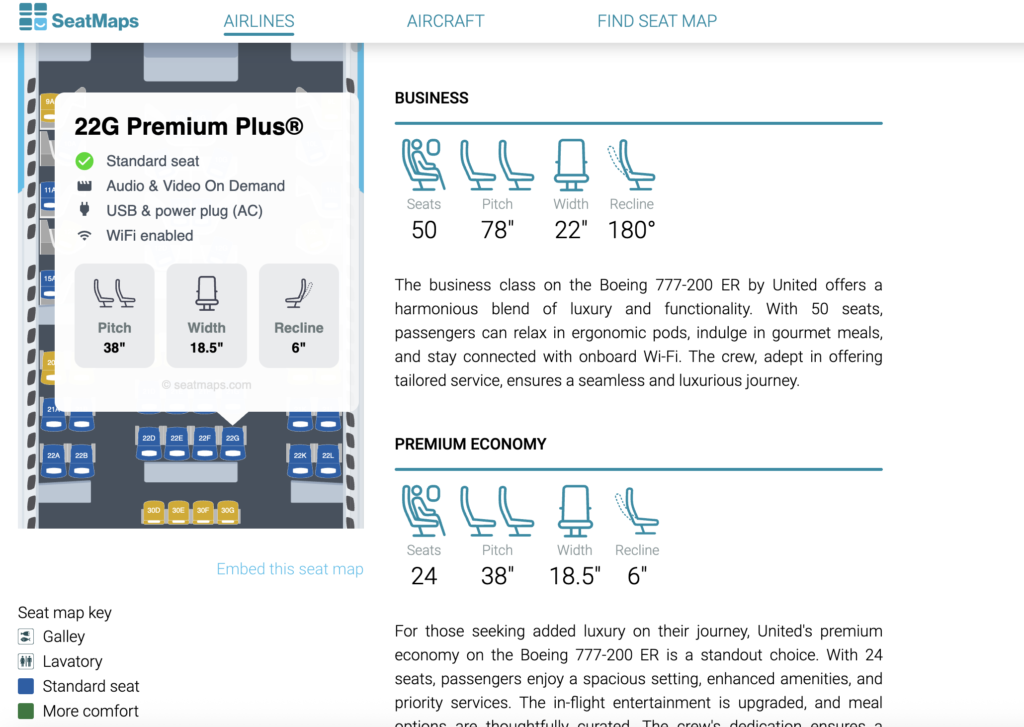
Even within an airline, some cabin elements can vary by aircraft. British Airways, for example, notes that certain design elements of its World Traveller Plus cabin vary across aircraft.
Before paying for the upgrade, look at:
- Seat width
- Seat pitch
- Recline
- Leg rests or footrests
- Seat configuration
- Meal service
- Baggage allowance
- Lounge access, if any
- Priority services
- Aircraft type
The aircraft matters too. An airline can operate several different Premium Economy seats across its fleet.
A personal favorite site to find all of this information is SeatMaps, where they have thousands of aircraft seat maps. It will show you the exact aircraft and configuration by inputting flight number and date of departure.
This is incredibly important because even two flights operated by the same airline can therefore provide different experiences.
7. Don’t Overvalue the Food and Amenities
Premium Economy marketing often focuses on the entire experience.
- Better meals.
- Priority boarding.
- Amenity kits.
- Better headphones.
- Maybe nicer glassware.
Those things are pleasant, but they shouldn’t drive a several-hundred-dollar purchase. Imagine paying an additional $600 for Premium Economy.
Would you pay $600 for a slightly better airplane meal and priority boarding?
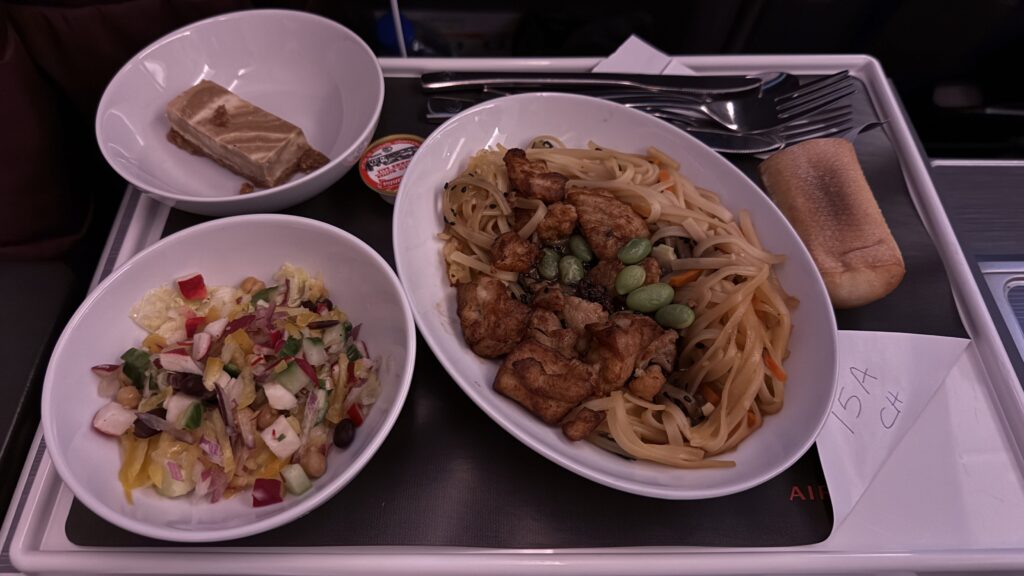
Probably not.
Most of the real value comes from the physical seat and additional personal space. Everything else should be treated as an added benefit.
This is especially important when comparing airlines because a fantastic marketing package can make relatively small improvements feel more significant than they actually are.
8. Check the Business Class Price Before Booking Premium Economy
This sounds counterintuitive, but Premium Economy can occasionally be priced too close to Business Class.
Imagine:
Economy: $900
Premium Economy: $1,900
Business Class: $2,400
Premium Economy costs an additional $1,000 over Economy. But Business Class costs only another $500 beyond Premium Economy. At that point, Premium Economy becomes difficult to justify.
For $500 more, Business Class could provide:
- A lie-flat seat
- Lounge access
- Significantly better meals
- More privacy
- Priority airport services
- Better sleep
The jump from Economy to Premium Economy might cost $1,000 while the much larger jump from Premium Economy to Business costs only $500.
Airline cabin pricing isn’t always proportional to the quality of the experience.
Always check all three cabins before booking.
9. Consider Whether You’re Using Cash or Miles
The value calculation gets even more interesting when points and miles are involved.
Suppose you find:
Economy: 40,000 miles
Premium Economy: 55,000 miles
Business Class: 120,000 miles
Premium Economy requires only another 15,000 miles. That could represent excellent incremental value.
But another airline might charge:
Economy: 40,000 miles
Premium Economy: 90,000 miles
Business Class: 110,000 miles
Now Premium Economy becomes much less compelling. For another 20,000 miles, you could potentially move into Business Class.
Don’t evaluate an award simply because it uses points instead of dollars. The better approach is to evaluate what you’re actually receiving in exchange for those miles.
Miles are still a currency. That’s especially important if you’re considering buying airline miles to complete the redemption, since the cash cost of acquiring those miles becomes part of the upgrade calculation.
The same incremental-value framework applies.
10. Consider the Entire Trip, Not Just the Seat
There is another side to the Premium Economy calculation that is difficult to quantify. Your flight is part of your trip.
Suppose you’re taking a five-day vacation to Europe. Since most transatlantic flights are red-eyes, you arrive at 7 a.m. after an overnight flight.
If spending another $350 helps you sleep better and makes your first day more enjoyable, that benefit extends beyond the aircraft.
Conversely, imagine you’re flying home. You have no plans after landing and can sleep the next morning. Maybe that same $350 isn’t nearly as valuable.
This is why paying for Premium Economy in one direction only can sometimes make sense. You might purchase Premium Economy for the overnight outbound flight and Economy for the daytime return.
There is no rule saying both directions need to be booked in the same cabin.
When Is Premium Economy Worth It?
Premium Economy tends to make the most sense when several factors line up:
- The flight is long.
- It’s an overnight flight.
- The upgrade premium is reasonable.
- The airline offers a strong Premium Economy seat.
- Extra-legroom Economy isn’t dramatically cheaper.
- Business Class is substantially more expensive.
- Arriving rested matters for your trip.
The more of these conditions that apply, the easier Premium Economy becomes to justify.
Conversely, Premium Economy becomes less compelling when you’re paying a large premium for a relatively short flight or when Business Class is priced only slightly higher.
How Much Should You Pay for Premium Economy?
There isn’t a universal threshold. A $400 upgrade could be terrible value on one itinerary and excellent value on another. But you can create your own framework.
Ask yourself:
How much more am I paying?
Then:
How many hours will I actually use the upgraded seat?
And finally:
What meaningful improvement am I receiving for that money?
Consider a 10-hour overnight flight with a $350 Premium Economy upgrade. You’re paying $35 per hour for a wider seat, more legroom, additional recline and potentially better sleep.
Now consider a six-hour daytime flight with an $800 upgrade. You’re paying $133 per hour.
The cabin might be identical, but the value isn’t.
Premium Economy vs. Economy: Which Should You Choose?
Choose Economy when keeping trip costs low is the priority, the flight isn’t particularly long, or you can get a comfortable extra-legroom seat for much less.
Choose Premium Economy when the flight is long enough for additional space to matter and the incremental price is reasonable.
And choose Business Class when Premium Economy has become so expensive that the additional cost of a genuinely premium experience is relatively small.
That’s the key.
Don’t decide which cabin you want first and then justify the price.
Compare the prices first and determine which cabin provides the best value.
The Fare Theory
So, is Premium Economy worth it? It can be.
But Premium Economy isn’t automatically good value simply because it’s more comfortable than Economy.
The value is in the difference.
If Economy costs $800 and Premium Economy costs $1,100 for a 12-hour overnight flight, the upgrade may be one of the easiest travel expenses to justify.
If Economy costs $800 and Premium Economy costs $1,900 for a seven-hour daytime flight, the same seat becomes a much harder sell.
That’s why the better question isn’t:
Is Premium Economy better than Economy?
Of course it is.
The better question is:
How much are you paying for the difference and what is that difference worth to you?
Because the best cabin isn’t always the most comfortable one.
It’s the one where the value of the experience justifies the price.