
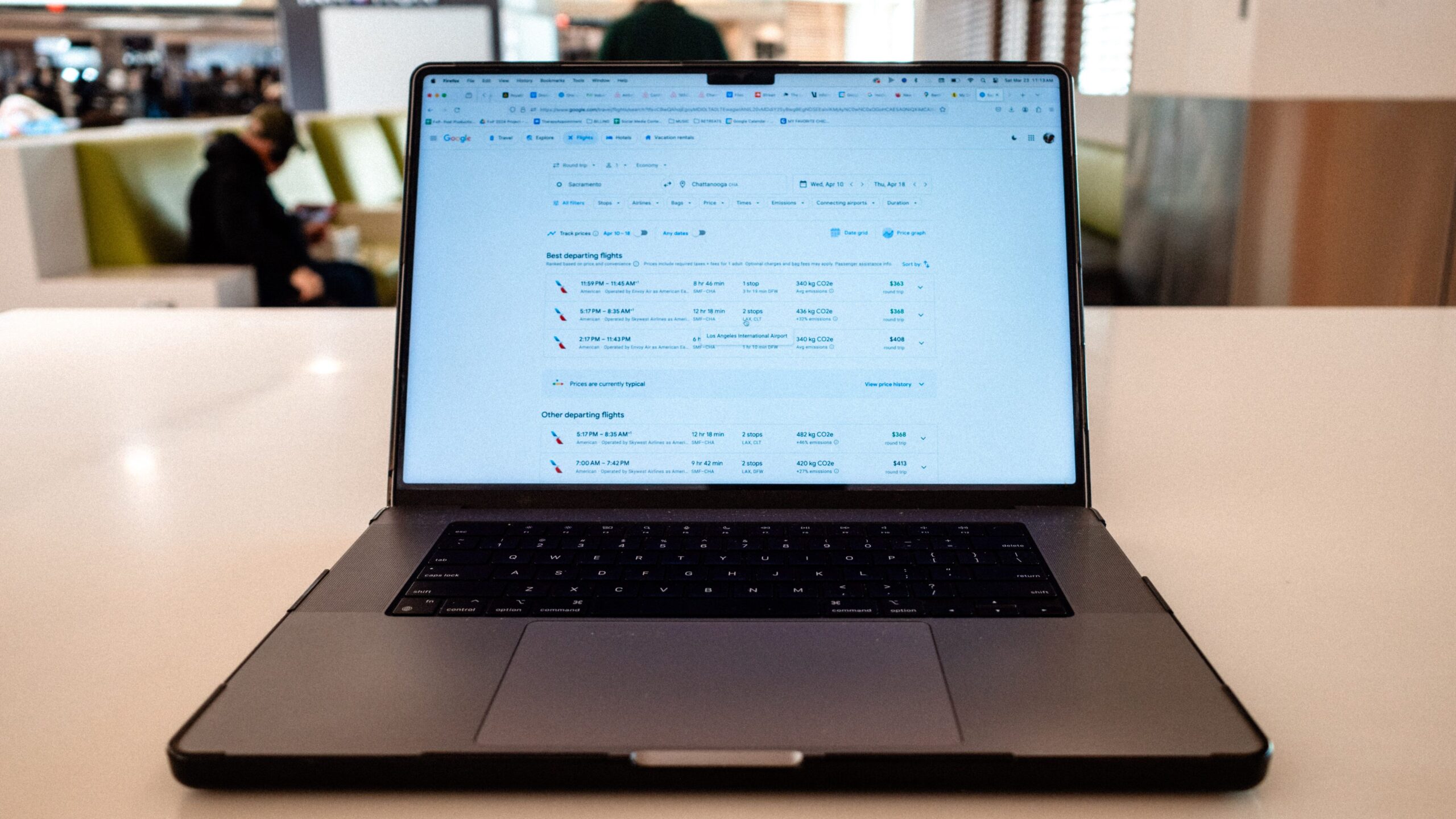
When Is the Best Time to Book a Flight?
If you’ve ever searched for airfare, found a reasonable price, and then hesitated before clicking purchase, you’ve probably asked the same question millions of travelers ask:
Should I book this flight now or wait?
You think to yourself that maybe the fare will drop tomorrow, or maybe it’ll be $200 cheaper next week.
Or what might actually happens is that you wait three days, search again, and discover the exact same flight suddenly costs $150 more.
That uncertainty has created one of the most persistent questions in travel:
When is the best time to book a flight?
Unfortunately, there isn’t a magic number of days before departure when airlines suddenly decide to sell their cheapest tickets and there isn’t a secret hour of the day when airfare resets.
And despite one of the oldest airfare myths on the internet, waiting until Tuesday afternoon isn’t a reliable strategy either. Flight prices are constantly changing because airlines are trying to answer a much more complicated question:
How much are the remaining seats on this flight worth?
Understanding that question is far more useful than memorizing a supposed “best day” to buy airfare.
There Is No Perfect Day to Book a Flight
Let’s start with the Tuesday myth.
For years, travelers were told that Tuesday was the best day of the week to buy airline tickets. There may have been more logic behind that advice decades ago, when airlines published fares and competitors responded on relatively predictable schedules.
Modern airline pricing doesn’t work that way.
Google Flights’ analysis of four years of airfare data found that Tuesday was historically the cheapest day to book, but only by about 1.3% compared with Sunday, the most expensive day. In a new report by Expedia, Friday is now “officially” the cheapest day to book flights, while Tuesday is both the cheapest day to fly domestically and least busy day of the week to fly.
In other words, there’s only a small tradeoff that possibly waiting several days for Tuesday to arrive might mean that the fare could increase in the meantime. What matters much more is where you are in the booking cycle for your particular flight.
And that’s where things get interesting.
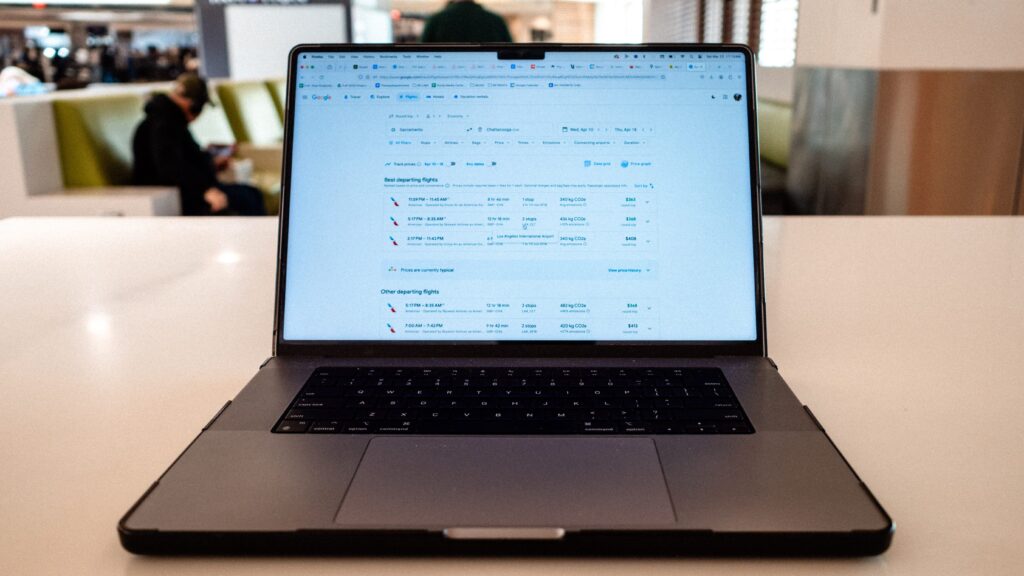
Why Flight Prices Change Before Departure
An airplane has a problem that makes airline pricing fundamentally different from pricing many other products:
The inventory expires.
If a store doesn’t sell a television today, it can try again tomorrow. But on the other hand, if an airline doesn’t sell seat 22A before the aircraft door closes, that seat produces exactly $0 of additional passenger revenue.
And as a result, airlines have to consider two competing risks.
- If the airline sells too many seats cheaply early in the booking cycle, then the airline might not have inventory left for travelers willing to pay much more closer to departure
- If the airline holds too many seats for higher-paying passengers who never materialize, then the aircraft could depart with empty seats that could have been sold earlier.
This is the basic problem airline revenue management attempts to solve.
Airlines use historical booking patterns, current demand, remaining inventory, competition, seasonality and other signals to continually decide how much inventory should remain available at different fare levels, also called fare buckets.
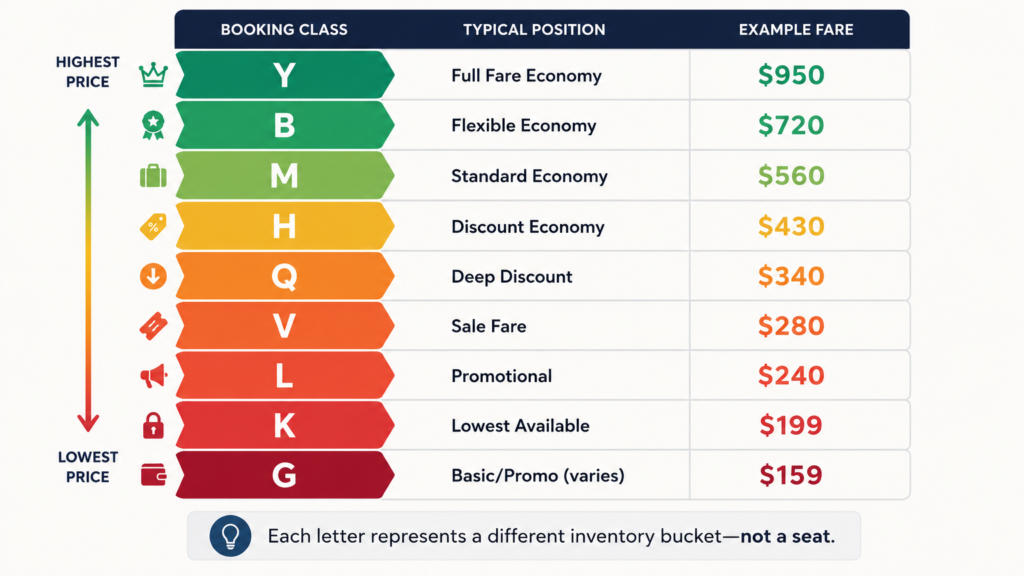
Dynamic pricing has become increasingly common across the airline industry. OAG estimates that roughly 80% of IATA member airlines use some form of dynamic pricing, allowing fares to respond to demand, seat availability, booking timelines, competitor pricing, and historical booking behavior.
This is exactly why airfare doesn’t necessarily follow an increasing price trajectory like this:
$300 → $325 → $350 → $400 → $450
It can typically behave more like:
$421 → $367 → $389 → $542 → $448 → $617
The closer departure gets, however, the airline has more information about how demand for that particular flight is actually developing.
That matters.
What Is a Flight Booking Window?
Instead of looking for a single perfect booking date, it’s more useful to think in terms of a booking window.
That’s a period before departure during which fares have historically tended to be relatively competitive.
Recent Google Flights data illustrates the concept well.
For U.S. domestic flights, Google found that average fares were lowest around 39 days before departure, with a historical low-price range of approximately 23–51 days before departure.
That doesn’t mean:
Book exactly 39 days before your flight.
It means fares across Google’s enormous dataset tended to be relatively favorable during that broader period. And your individual flight can behave completely differently.
A Friday-night nonstop from New York to Miami during Presidents’ Day weekend isn’t facing the same demand as a Tuesday afternoon flight between the same cities in September.
Averages describe markets. You purchase individual flights.
That’s an important distinction.
Domestic vs. International Flights
International airfare tends to reward earlier planning more than domestic airfare.
Google’s latest analysis found that international fares departing the United States have historically been lowest 49 days or more before departure. Its recommendation is essentially not to count on substantial last-minute price declines for international travel.
For Europe specifically, Google found a similar pattern: fares have historically been lowest 48 days or more before departure. Expedia has also noted a similar trend where travelers can save $190 on average by booking 31 – 45 days ahead.
This makes intuitive sense when you consider the product.
A long-haul international flight may have several cabins, connecting passengers from numerous markets, multiple fare classes and travelers booking months in advance.
The airline isn’t simply asking:
How many people want to fly from New York to Paris?
It’s forecasting demand from potentially hundreds of different passenger itineraries that could consume inventory on that flight.
That makes waiting for a dramatic last-minute bargain particularly risky.

Why Last-Minute Flights Often Get Expensive
A common assumption is that airlines should discount unsold seats shortly before departure. After all, isn’t $300 better than letting an empty seat generate nothing?
Sometimes.
But airlines also know something important about travelers who book at the last minute:
Many of them need to travel.
- A business meeting suddenly appears.
- A family emergency happens.
- A customer needs to be visited.
- Plans change.
These travelers may be substantially less price-sensitive than someone planning a vacation six months in advance.

Airlines don’t necessarily want to sell their remaining inventory cheaply if their revenue-management systems predict that higher-paying demand may still arrive. Meanwhile, as lower-priced fare classes sell out, only more expensive inventory may remain available.
That’s why waiting until the final few days can become extremely expensive, even when there are still plenty of empty seats visible on the seat map.
Empty seats do not necessarily mean cheap inventory.
Your Travel Dates Matter More Than Most Booking Rules
This is where generic “best time to book” advice starts breaking down. Consider these two travelers…
- One wants to visit Chicago on a random Tuesday in February.
- The other needs to fly to New Orleans during Mardi Gras.
Should both travelers follow the same booking window? Not at all and this is because when demand is highly predictable, waiting becomes riskier.
Think:
- Thanksgiving
- Christmas and New Year’s
- Spring break
- Major sporting events
- School vacations
- Festivals
- Three-day weekends
- Popular summer weekends
Google’s historical data demonstrates how those windows can differ. Thanksgiving fares have tended to be lowest roughly 35 days before departure, while Christmas fares have averaged their lowest around 51 days before departure.
Even in a recent podcast, the broader industry has generally seen prices for Thanksgiving travel up 13% compared to last year, while Christmas and New Year’s flights up nearly 20% compared to last year.

But there’s a realistic perspective one should take…if you need a specific nonstop flight two days before Christmas at a convenient time, your objective shouldn’t necessarily be squeezing another $27 out of the fare.
It may be protecting yourself against losing the itinerary you actually want.
Price Isn’t the Only Thing That Can Disappear
This is one of the biggest mistakes travelers make when deciding whether to wait. They think the only variable changing is price, but in reality, it’s not.
The $347 flight you’re considering today might become $327 next week, which any cost savings could be great because it saved you $20.
But something else could happen…
- The convenient 8:15 a.m. departure sells out.
- The nonstop becomes expensive.
- Only middle seats remain.
- The cheap fare no longer includes the flexibility you wanted.
- Or the itinerary you ultimately book requires a connection and adds three hours to your trip.
While all of these appear to be worse-case scenarios as the number of different options available to consumers have changed, there’s a broader, overarching question that should be asked. It therefore shouldn’t simply be:
Could this flight get cheaper?
It should be:
Is the potential savings worth the risk of losing this particular itinerary?
That’s a much better framework.
Use Price History Instead of Guessing
One of the biggest advantages travelers have today is that they don’t need to rely entirely on broad booking rules. There is a vast amount of data available to consumers to ensure they can make an accurate decision when it comes to booking flights.
Google Flights can show whether the fare you’re seeing is low, typical or high compared with historical prices for similar trips.
For eligible searches, Google also provides a “cheapest time to book” estimate based on historical pricing for the actual destination and travel dates you’re searching.
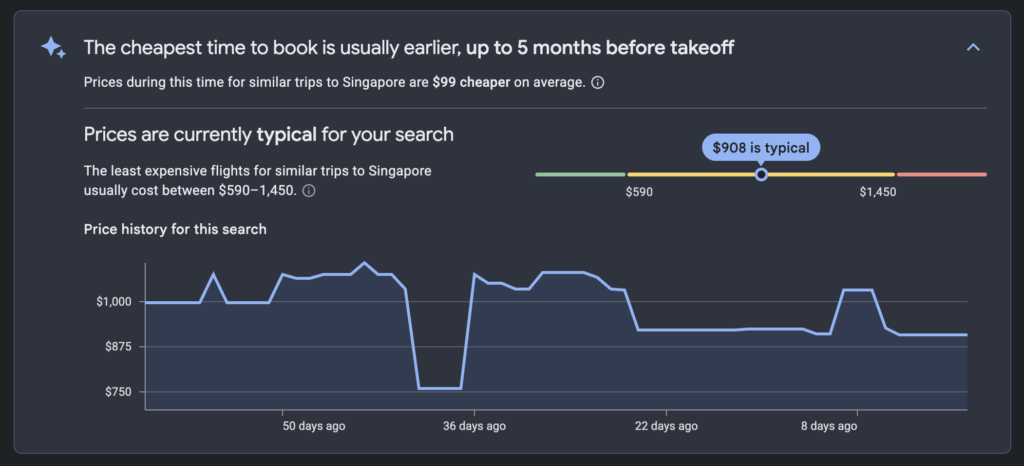
That’s considerably more useful than somebody telling you:
Always book 42 days before departure.
If Google tells you a $386 fare is lower than usual for your route, that’s a meaningful signal. If it tells you prices are currently high and historically tend to decline later, waiting becomes more defensible.
You can also turn on price tracking and let the system notify you when fares move rather than repeatedly searching the same itinerary yourself.
Don’t Confuse the Best Time to Book With the Best Time to Fly
There are two different comparisons at hand when one might think about the best time to book vs. the best time to fly. Data shows that:
- When you buy the ticket appears to matter relatively little by day of week.
- When you actually fly can matter considerably more.
Google’s latest data found that flights departing Monday through Wednesday have historically been about 13% cheaper than weekend departures.
That doesn’t mean Wednesday will always be cheaper. It illustrates a larger principle:
Changing the trip itself can save considerably more money than trying to perfectly time the purchase.
If you can:
- Leave Tuesday instead of Friday
- Return Wednesday instead of Sunday
- Travel one week earlier
- Use a nearby airport
- Accept a connection
- Take an earlier or later departure
you may unlock completely different pricing.
In fact, Google’s analysis found that itineraries with a connection were roughly 22% cheaper on average than nonstop flights, which makes sense because nonstop flights are often seems as more “premium” and convenient.
That’s a much larger difference than the historical 1.3% gap between the cheapest and most expensive days to purchase a ticket.

So When Should You Actually Book?
Here’s the biggest question of the entire article. And broadly speaking, The Fare Theory doesn’t recommend using a rigid rule when booking.
We’d use a decision framework.
Book sooner when:
- You’re traveling internationally
- Your dates aren’t flexible
- You’re traveling during a holiday or major event
- You need a particular nonstop flight
- There are relatively few flights serving your route
- You’re traveling with several people
- The current fare is already historically reasonable
- Losing the itinerary would matter more than saving another $50
Consider waiting when:
- Your trip is still several months away
- Current prices appear unusually high
- Historical pricing suggests you’re outside the typical low-price window
- You have flexible dates or airports
- There are many competing flights
- You’re actively tracking the fare
- You’d be comfortable booking an alternative itinerary
The important distinction is that waiting is itself a pricing decision. You’re effectively betting that future inventory will be offered for less than today’s inventory.
Sometimes you’re right, and look, sometimes you’re not. However,
The Fare Theory: Stop Trying to Predict the Bottom
Travelers often approach airfare as though the goal is to buy at the absolute lowest price the flight will ever reach and honestly speaking, that’s nearly impossible without knowing the exact details of the systems.
Imagine a flight fluctuates like this:
$492 → $448 → $417 → $386 → $421 → $459 → $537
You buy at $417.
Did you make a bad decision because somebody else bought at $386?
The Fare Theory would argue no because you purchased reasonably close to the bottom while eliminating the risk that the fare would move substantially higher. In some instances you can also always re-price the flight (and sometimes get a flight credit for the difference), but you’ve locked yourself into a lower price than previously compared against.
That’s a successful airfare decision. The same principle applies to investing, hotel rates and plenty of other variable prices:
You don’t necessarily need the lowest possible price. You need a price you’re comfortable paying for the product you want.

The Bottom Line
So, when is the best time to book a flight?
There isn’t one perfect day.
Historical data suggests domestic flights often have a favorable window several weeks before departure, while international travel generally rewards booking earlier. Holidays, major events and inflexible itineraries can justify booking even further ahead.
But averages should be treated as context, not rules.
The better strategy is to understand the booking window, compare the current fare with historical pricing, track prices when you have time to wait, and recognize when the itinerary itself is valuable enough to stop gambling on another price drop.
Because the goal isn’t to prove that you bought the cheapest ticket anyone on the airplane purchased.
It’s to buy the flight you want at a price that makes sense.