Why Travelers Love Free Upgrades
Few things in air travel create quite as much excitement as an unexpected upgrade.
You booked Economy. You expected Economy. Then suddenly you’re sitting in Premium Economy, First Class, or Business Class without paying anything extra.
It feels like you’ve won…and in some ways, you have. But here’s why travelers love free upgrades…
The appeal of a free airline upgrade goes beyond getting a larger seat, better meal, or more legroom. Free upgrades tap into several powerful psychological forces that can make the experience feel significantly more valuable than it objectively is.
That matters because airlines aren’t just competing for your money on a single flight. They’re competing for your future loyalty.
Once you’ve experienced something better, going back can be surprisingly difficult.
Free Feels Different
Imagine you’re checking in for a flight and the airline offers you a Business Class upgrade for $600.
You look at the price and think:
Absolutely not.
You’d rather keep the $600 and spend seven hours in Economy.
Now imagine arriving at the gate and hearing your name called. The gate agent hands you a new boarding pass.
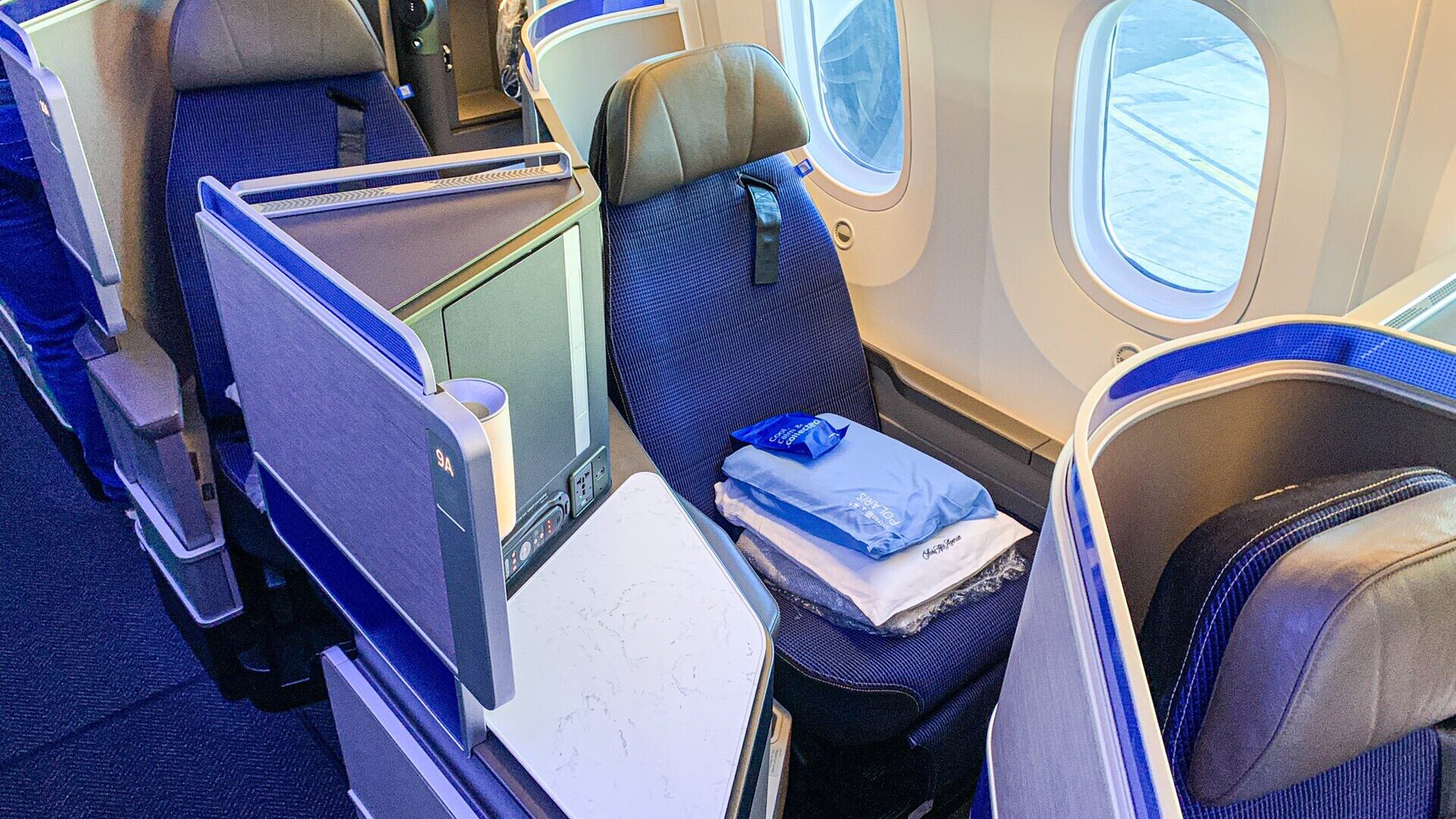
You’ve been upgraded to Business Class for free. Suddenly, that exact same seat feels incredible. The physical product hasn’t changed. It’s still the same Business Class seat that you declined for $600.
What changed was how you acquired it.
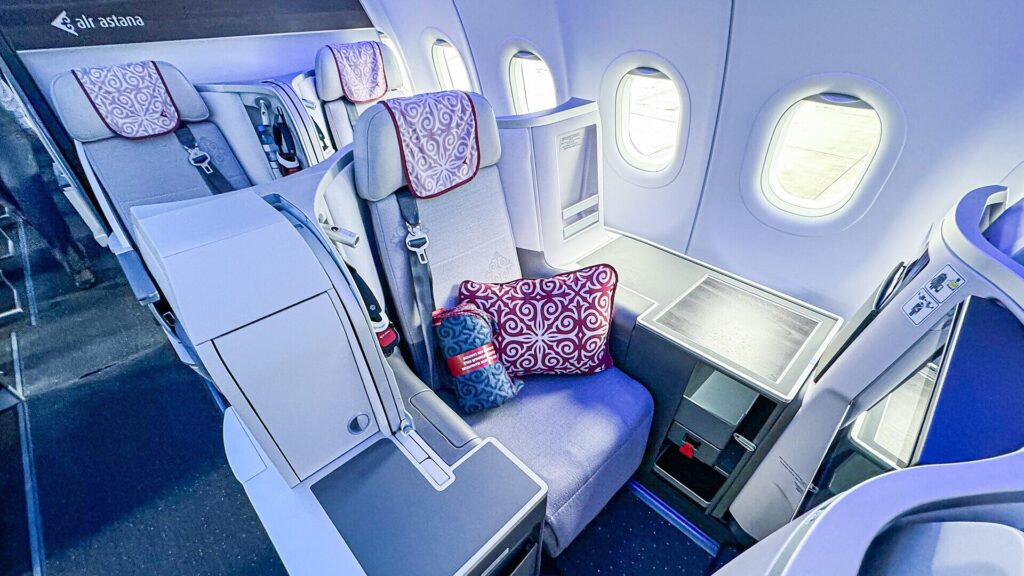
When we’re asked to pay for something, we immediately begin evaluating the opportunity cost. What else could I do with $600?
- Could I book another flight?
- Pay for several dinners?
- Put it toward a hotel?
- Keep it in savings?
But when the upgrade costs nothing, that tradeoff disappears. Instead of evaluating whether the experience is worth purchasing, you’re simply experiencing the benefit.
That’s part of what makes free flight upgrades so psychologically powerful.
We Often Confuse Retail Price With Personal Value
Suppose your Business Class seat was selling for $3,000 while your Economy ticket cost $700 and you receive a complimentary upgrade.
How much value did you just receive? It’s tempting to say $2,300. After all, that’s the difference between the two ticket prices…but there’s a problem.
You weren’t willing to pay $3,000.
Maybe you wouldn’t even have paid $1,500. Perhaps the most you’d realistically have spent to upgrade was $400. The airline may price the experience at $2,300 more than Economy, but that doesn’t necessarily mean you personally received $2,300 of value.
Those are two different concepts.
This distinction appears constantly in travel.
Hotel suites, airport lounges, airline status benefits, points redemptions and premium cabins all have published prices. Travelers frequently use those prices to calculate how much “value” they’ve received.
But retail price isn’t the same thing as personal value.
If you would never have paid the retail price, using it to measure your benefit can dramatically exaggerate what you actually received.
A free upgrade can still be fantastic. Just don’t mistake the airline’s asking price for your own valuation.
The Psychology of Exclusivity
Air travel is filled with visible status distinctions. At the airport, passengers are constantly separated into groups:
- Priority check-in
- Priority security
- Lounge access
- Priority boarding
- Elite status lines
- Premium cabins
- Dedicated baggage handling
Then you board the aircraft, where some passengers turn right while others turn left. Even if two passengers are traveling to exactly the same destination, their experiences can be completely different.
That’s intentional.
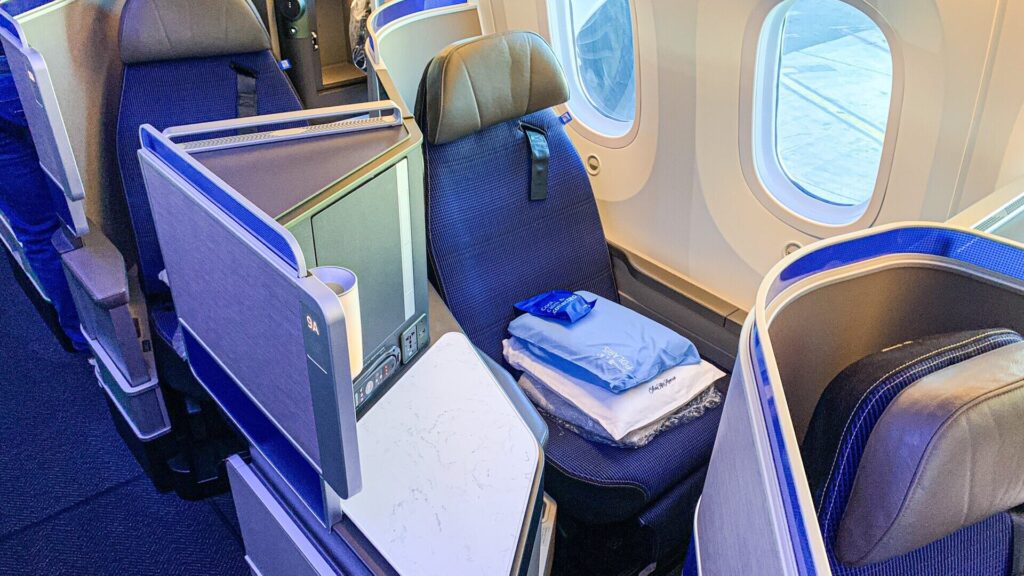
Premium travel isn’t sold entirely on better physical features. Airlines also sell exclusivity.
A Business Class seat may offer more space, better food and improved service, but part of its appeal comes from accessing an experience that most passengers aren’t receiving.
An unexpected upgrade temporarily moves you into that group.
You didn’t simply get more legroom. You were selected to receive something better. That can make the experience feel more significant than the physical improvements alone would suggest.
An Upgrade Can Feel Like Winning
There’s another reason travelers become obsessed with free airline upgrades:
Uncertainty makes rewards more exciting.
If you purchase Business Class outright, you know exactly what you’re getting. You paid for the premium cabin, selected your seat, and expect the upgraded experience.
But when you’re waiting for a complimentary airline upgrade, the outcome isn’t guaranteed.
- You might spend days watching the seat map.
- You might check the airline upgrade list before departure.
- You might monitor how many First Class or Business Class seats remain.
- You might even find yourself doing the mental math: There are six seats left and I’m number four on the upgrade list. Maybe this actually happens.
Then the notification arrives…your upgrade cleared.
Suddenly, moving from Economy into a premium cabin doesn’t feel like something you purchased. It feels like something you won.
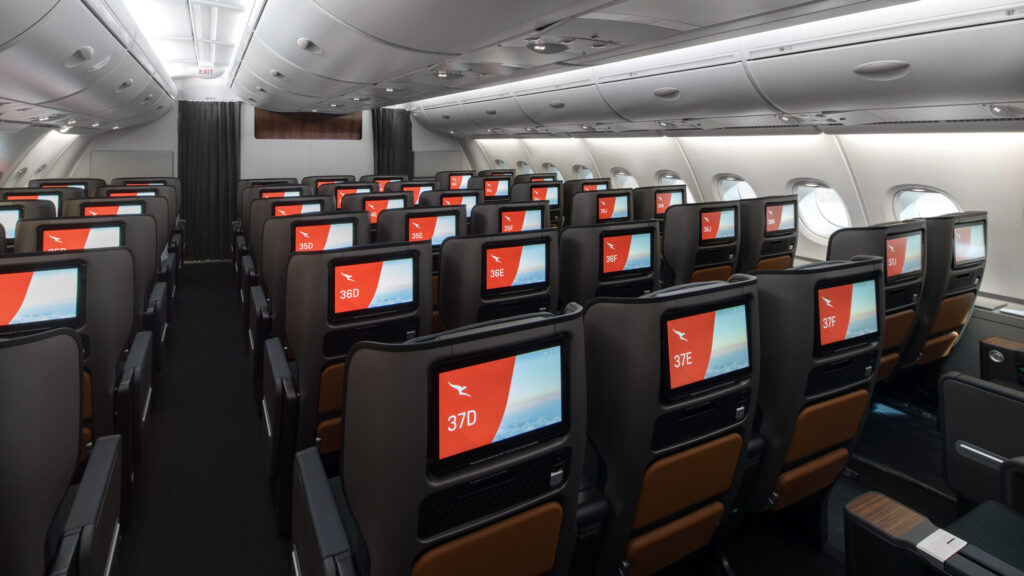
The upgrade becomes more than transportation. It becomes a reward, and rewards can influence future behavior.
A traveler who receives an unexpected upgrade may remember the experience long after they’ve forgotten the exact price of the original ticket. They remember seeing their new seat assignment. They remember walking into the premium cabin. They remember getting something they weren’t certain they would receive.
That positive emotional association can become incredibly valuable to an airline, because the next time that traveler books a flight, they may not only be thinking about price…
They may also be thinking about the possibility of experiencing that feeling again.
Elite Status Makes Free Upgrades Feel Earned
The psychology becomes even stronger when an upgrade is connected to airline status.
A completely random upgrade feels lucky.
An elite-status upgrade can feel earned.
You flew the required miles, segments, or spending thresholds. You chose the airline repeatedly. Eventually, one of the benefits materialized.
The traveler can therefore create a mental connection:
My loyalty produced this experience.
That’s an extremely powerful relationship for an airline loyalty program.
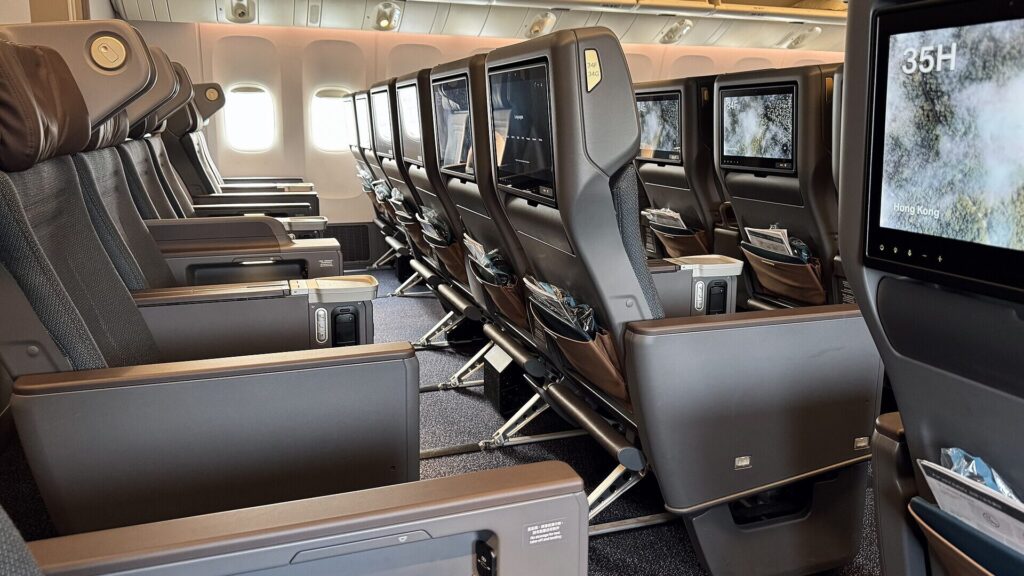
The traveler isn’t simply evaluating the upgrade anymore. They’re evaluating the entire ecosystem that supposedly made the upgrade possible.
Suddenly, previous decisions can feel validated.
- Paying slightly more to fly the airline? Worth it.
- Taking an inconvenient schedule to stay loyal? Maybe worth it.
- Putting more spending through the airline’s ecosystem? Potentially worth it.
The upgrade becomes evidence that loyalty “works.” And that’s where travelers need to be careful.
The Upgrade Can Make You Overvalue Airline Status
Elite status can absolutely provide meaningful benefits. But an occasional free upgrade can distort how travelers calculate those benefits.
Imagine you spent an additional $600 throughout the year choosing just one specific airline instead of cheaper competitors because you wanted to maintain status.
Then you receive a complimentary First Class upgrade on a flight where the premium cabin was selling for $700 more than Economy.
It’s easy to think:
I got $700 of value from status. Maintaining it was worth it.
Maybe…But would you actually have paid $700 for that upgrade? If the answer is no, the calculation changes.
Perhaps you would have paid $200. In that case, the upgrade may have provided something closer to $200 of personal value, even if the airline was asking $700 for the seat.
Meanwhile, you spent $600 throughout the year chasing the status that helped produce it.
That’s why airline status should be evaluated based on benefits you genuinely use and value, not the theoretical retail prices attached to them.
Airlines Benefit When You Experience Something Better
There’s another side to airline upgrade psychology that’s particularly important:
A free upgrade can introduce you to a product you might eventually pay for.
Imagine you’ve always flown Economy. You know what to expect, and you’re generally satisfied with the experience.
Then one day, you receive a complimentary upgrade to Premium Economy on an eight-hour flight.
Suddenly, the differences become obvious:
- More legroom
- A wider seat
- Additional recline
- More personal space
- Improved meals or service
- Priority treatment at the airport, depending on the airline
None of these benefits were necessarily a mystery before. You probably knew Premium Economy offered a better experience.
But knowing that and actually experiencing it for eight hours are very different things.
On the outbound flight, you didn’t fully know what you were missing.
On the return flight, you do.
Now imagine walking past Premium Economy and returning to your regular Economy seat. The legroom feels a little tighter. The seat feels a little narrower. The lack of recline becomes more noticeable.
Economy hasn’t necessarily gotten worse.
Your reference point has changed.
That’s what makes an upgrade so powerful.
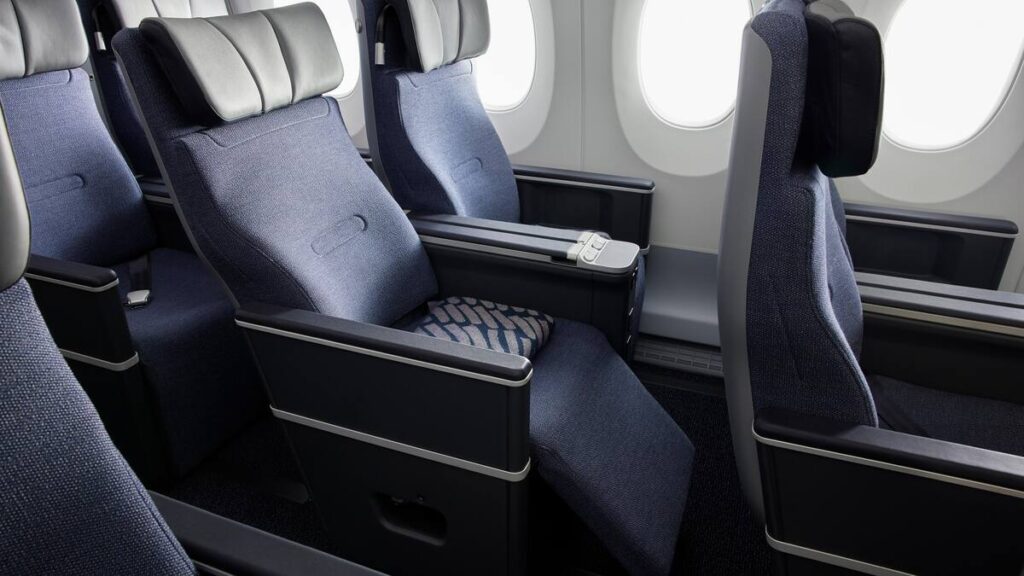
Once you’ve experienced a better cabin, you’re no longer comparing Premium Economy with something you’ve never tried. You’re comparing two experiences you actually understand.
The next time you’re booking a flight and see:
Economy — $650
Premium Economy — $825
That extra $175 suddenly has context.
Instead of wondering whether Premium Economy is worth the additional cost, you already know what those extra dollars can buy you.
And once that happens, airlines have an opportunity.
Today’s free upgrade can create tomorrow’s paying premium-cabin customer.
This Is Why Upgrade Offers Are So Interesting
Airlines have become increasingly sophisticated about selling upgrades after the original ticket purchase.
You might book Economy and later see an offer to move into a better cabin for a fixed amount.
Now the airline has changed the decision.
You’re no longer asking:
Should I spend $2,000 on Business Class?
You may instead be asking:
Should I spend another $450 to upgrade the ticket I already bought?
Psychologically, those can feel like very different purchases.
And if you’ve previously experienced the premium cabin, perhaps through a free upgrade, you have a reference point. You know what the additional money buys.
That’s why travelers should evaluate upgrade offers independently rather than simply thinking about how exciting the premium cabin would be.
The right question isn’t:
How much does Business Class normally cost?
It’s:
How much is Business Class worth to me on this particular flight?
A $300 Upgrade Can Be Better Than a Free Upgrade
This sounds contradictory, but it gets to the heart of travel value. Suppose you receive a free First Class upgrade on a 70-minute domestic flight.
That’s great.
Maybe you get a larger seat, a drink and priority boarding.
Now imagine another trip where you’re offered a lie-flat Business Class upgrade for $300 on an eight-hour overnight flight.
The second upgrade isn’t free, but it could provide significantly more actual value. You may sleep for several hours, get a much better meal and arrive more rested and have more usable time at your destination.
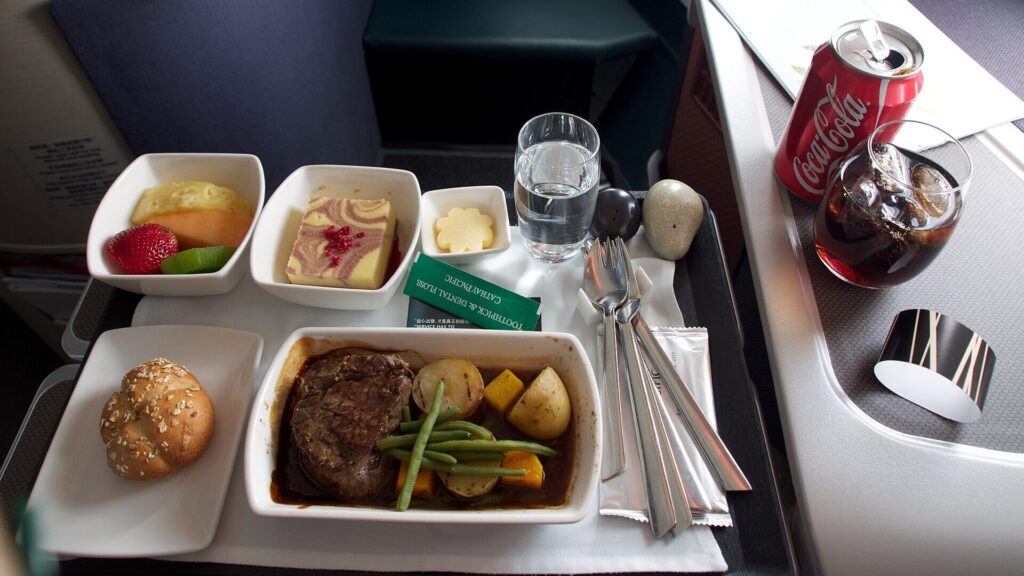
That’s why “free” shouldn’t automatically become synonymous with “valuable.”
Price matters.
But so does the experience you’re receiving. A free benefit you barely care about can be worth less than a paid benefit that meaningfully improves your trip.
How to Decide If a Flight Upgrade Is Worth It
The best upgrade is the one you actually value. There isn’t a universal dollar amount that determines whether a flight upgrade is worth it.
A five-hour nonstop flight before an important event might make extra comfort particularly valuable, while a short morning flight home might not.
A traveler who can sleep anywhere may not place as much value on buying or being in Business Class. On the other hand, someone who struggles to sleep upright may value a lie-flat seat tremendously.
So the overarching idea would be that when deciding whether an airline upgrade is worth it, consider what you’re actually buying:
- Additional comfort
- More space
- Better sleep
- Improved meals and service
- Priority airport services
- A better arrival experience
- Time, depending on the itinerary
Then compare those benefits against the actual upgrade price. And this is why travel decisions become problematic when they’re reduced entirely to the specific cost
Value is personal.
The airline determines what it wants to charge, but at the end of the day, only you determine what the experience is worth.
Those numbers don’t have to be the same.
The Fare Theory: Don’t Let “Free” Determine Value
Look, let’s be honest…free airline upgrades are fun. When you get them, you should enjoy them. But they’re also a perfect example of why understanding travel value requires separating price from value.
An airline might sell your upgraded seat for $2,000 more than the one you purchased. But, that doesn’t automatically mean you received $2,000 in value.
Likewise, an upgrade that costs $300 isn’t automatically a bad deal simply because someone else received the same seat for free.
The real question is what the experience changes for you.
- Does it help you sleep?
- Save meaningful time?
- Make a long flight substantially more comfortable?
- Give you an experience you’ve always wanted to try?
If so, there’s real value there.
But perhaps the most interesting thing about free upgrades isn’t the upgrade itself. It’s how experiencing a better cabin can change what travelers value afterward.
Once you’ve experienced the lounge, priority boarding, extra space, better service or lie-flat seat, the airline has given you something else:
A new reference point.
And the next time you’re sitting in Economy looking through the curtain at the cabin you once experienced for free, paying for an upgrade might suddenly seem a little more reasonable.
That’s why travelers love free upgrades.
And it’s one reason airlines have spent decades making premium travel feel like something worth chasing.