
Why Do Airlines Overbook Flights? The Economics Behind Overbooking
Why Would Airlines Sell More Tickets Than They Have Seats?
Imagine you’re booking a flight with 180 seats. It would only seem logical that once passenger #180 buys a ticket, the airline should stop selling tickets.
But that’s not necessarily what happens…
Airlines know from decades of operating flights that not every reservation ultimately turns into a passenger sitting on the aircraft.
Someone might cancel their trip. Another passenger might miss a connection. Someone else could change to an earlier flight. And some travelers simply don’t show up.
That creates a problem for the airline.
If five passengers don’t show up for a completely sold-out 180-seat flight, the aircraft departs with five empty seats.
Those seats can never be sold again.
Understanding why airlines care so much about those empty seats requires understanding how airlines price flights. Airlines aren’t simply setting one price for every seat; they’re managing a limited inventory that becomes worthless the moment the flight departs.
Overbooking is another tool for managing that inventory.
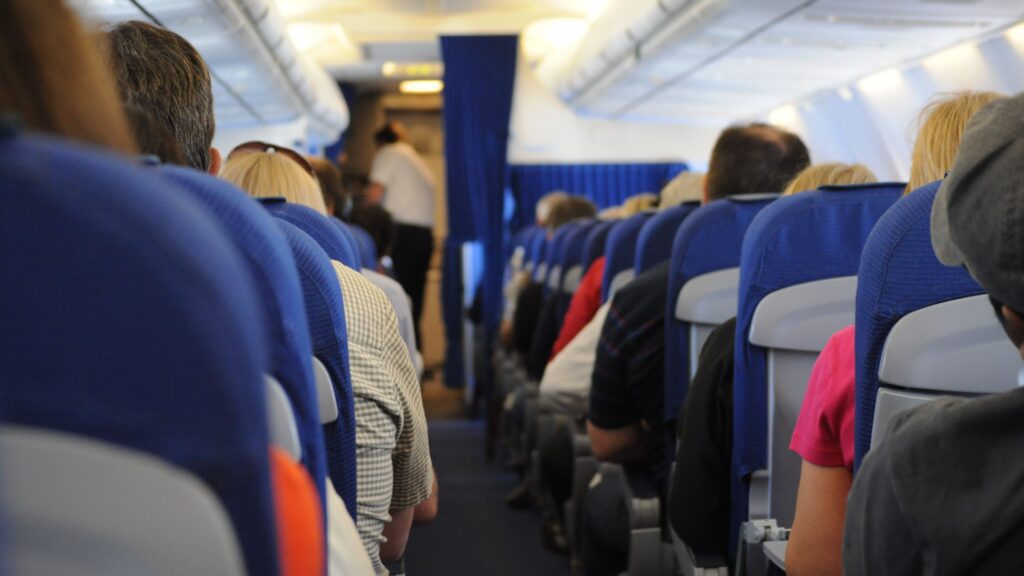
An Empty Airline Seat Is Worth $0 After Departure
Airline seats are unusual products because their value has an expiration date.
Consider a retailer with ten unsold televisions….the store can try selling them tomorrow. Now, consider a hotel chain which is slightly more restrictive. Once tonight passes, the hotel can never sell tonight’s room again.
Airline inventory is even more extreme.
Once a flight from New York to Los Angeles pushes back from the gate, every empty seat on that aircraft instantly loses its ability to generate ticket revenue for that flight.
Suppose an airline operates a 180-seat aircraft and its historical data suggests that, on average, five passengers booked on a particular flight won’t actually show up. If the airline stops accepting reservations at exactly 180 passengers, it may routinely depart with roughly 175 passengers.
Instead, it might accept 184 reservations.
If five passengers ultimately don’t show:
184 reservations − 5 no-shows = 179 passengers
The aircraft departs nearly full. The airline has potentially generated additional revenue without inconveniencing anyone.
That’s the basic economics behind airline overbooking.
How Do Airlines Decide How Much to Overbook?
Airlines aren’t simply guessing how many passengers will miss their flights.
They have enormous amounts of historical booking data that can help estimate how many passengers are likely to show up.
Depending on the airline and flight, forecasting can consider factors such as:
- Historical no-show rates
- Route
- Departure time
- Day of the week
- Seasonality
- Connecting passengers
- Booking patterns
- Passenger behavior
- Ticket restrictions and flexibility
A Monday morning business-heavy flight could behave differently from a Saturday afternoon leisure flight to Florida.
Airlines can use those differences to estimate the probability that every reservation will actually become an occupied seat.
This forecasting is part of the broader discipline of airline revenue management, where airlines attempt to maximize the revenue generated by a limited number of seats.
And that connects overbooking directly to airfare pricing.

What Do Fare Buckets Have to Do With Overbooking?
Overbooking and airfare pricing aren’t exactly the same thing, but they’re solving related inventory problems.
Airlines commonly divide ticket inventory into different fare buckets. You might have several passengers sitting in the same economy cabin who paid completely different prices because their tickets were sold from different fare classes.
As cheaper inventory disappears, more expensive fare buckets may become the lowest available option.

Overbooking deals with another question:
How many reservations should the airline accept in the first place?
Think about it this way:
Fare buckets help determine what price inventory is sold for. Overbooking helps airlines account for inventory that may be booked but ultimately go unused.
Both are designed around the same reality: airline seats are perishable inventory.
What Happens When an Airline Overbooks a Flight?
Of course, airline forecasts aren’t perfect. Suppose our hypothetical 180-seat aircraft has 184 reservations.
The airline expected at least four passengers not to show up.
But this time, all 184 arrive…now there’s a problem. The airline has more passengers than available seats.
Typically, the airline will first look for passengers willing to voluntarily give up their seats in exchange for compensation and alternative travel arrangements.
You may have experienced this at the gate:
“We’re looking for volunteers willing to take a later flight…”
The airline may offer a travel credit or other incentive and increase the offer until enough passengers volunteer.
If enough people accept, the problem is solved voluntarily. If not, some passengers could potentially be involuntarily denied boarding.
What Are Your Rights If a Flight Is Overbooked?
Overbooking itself isn’t prohibited in the United States.
However, the U.S. Department of Transportation has rules governing situations where passengers are involuntarily denied boarding because a flight is oversold.
The exact compensation can depend on factors including how quickly the airline can get you to your destination.
There are also circumstances where passengers may not qualify for compensation, so it’s worth checking the DOT’s current guidance rather than assuming every overbooking situation automatically results in a payout.
There’s another important distinction here:
An oversold flight doesn’t automatically mean anyone gets bumped.
If the airline accepted 184 reservations for 180 seats but five people don’t show up, there isn’t actually a seat shortage when boarding begins.
To passengers on that flight, nothing unusual happened.

Why Don’t Airlines Just Stop Overbooking?
The short answer is that because doing so creates a different cost. Imagine an airline knows that a particular flight consistently experiences several no-shows.
It has two choices.
- It can stop accepting reservations when every physical seat is technically booked and risk departing with empty seats.
- Or it can forecast how many passengers are likely to show up and cautiously accept additional reservations.
Neither option is risk-free.
Underestimate no-shows: the aircraft may depart with empty seats.
Overestimate no-shows: too many passengers may arrive, requiring the airline to find volunteers or deny boarding.
The airline is effectively trying to find the point where the expected additional revenue from selling more reservations outweighs the expected cost of overselling the flight.
That doesn’t mean the model works perfectly every time.
It means overbooking is a calculated economic decision rather than an airline accidentally forgetting how many seats are on its aircraft.
Does Overbooking Make Flights Cheaper?
This is where we should be careful. It’s tempting to say overbooking directly makes airline tickets cheaper, but airfare doesn’t work that simply.
Ticket prices are influenced by demand, competition, remaining inventory, route economics, fare restrictions and numerous other factors.
What we can say is that overbooking allows airlines to use their inventory more efficiently.
An airline consistently departing with empty seats that could have been occupied is leaving potential revenue behind.
Whether those efficiencies ultimately translate into lower fares on any individual flight is a much more complicated question.
Is Airline Overbooking Bad for Passengers?
From the passenger perspective, airline overbooking can sound inherently unfair.You bought a ticket, so why shouldn’t there automatically be a seat waiting for you?
The key is understanding that airlines aren’t necessarily expecting to deny anyone boarding…they’re forecasting that some percentage of reservations won’t actually result in passengers showing up.
Most of the time, that process happens completely behind the scenes.
The downside appears when the forecast is wrong.
And when that happens, the inconvenience isn’t distributed evenly across the aircraft. It’s concentrated among the relatively small number of passengers who may need to volunteer or be reaccommodated.
That’s the tradeoff built into the system.
Why Overbooking Makes Economic Sense for Airlines
Airline overbooking makes much more sense once you stop thinking about an airline seat as a normal product.
- A retailer can sell unsold merchandise next week.
- An airline can’t sell seat 18A on yesterday’s flight.
Once the aircraft door closes, that inventory is gone forever.
That’s why airlines forecast demand, divide seats into fare buckets, adjust prices and sometimes accept more reservations than there are physical seats.
They’re all variations of the same fundamental problem:
How do you maximize the value of inventory that disappears the moment the flight departs?
The Fare Theory take: Overbooking isn’t really about selling the same seat twice. It’s about predicting how many reservations will actually become occupied seats, and balancing the revenue opportunity of a full aircraft against the risk of having too many passengers show up.
And that concept is central to understanding how airlines price flights in the first place.