Why Do Airlines Fly with Empty Seats? The Economics of Airline Operations
Every traveler has looked around a half-empty aircraft and asked the same question:
“How is this flight profitable?”
At first glance, it seems irrational. The airline has already paid for the aircraft, fuel, crew, airport fees, and maintenance. Wouldn’t it make more sense to slash prices at the last minute and fill every seat?
Not necessarily.
One of the most common misconceptions in travel is that airlines are trying to maximize the number of passengers on every flight. But in reality, airlines are trying to maximize revenue.
Those are very different goals. So why do airlines fly with empty seats? We break it down below.
Empty Seats Don’t Mean Empty Profit
Imagine two flights between New York and Chicago.
- Flight A departs completely full with 180 passengers paying an average fare of $150.
- Flight B departs with only 140 passengers, but those travelers paid an average fare of $300.
Despite carrying fewer passengers, Flight B generates significantly more revenue.
Airlines don’t measure success by occupancy alone. They measure success through metrics like revenue per available seat mile (RASM), yield, and total route profitability.
A full airplane can actually be less profitable than a partially full one.
The Last Seat Is Often the Most Valuable
Most travelers assume airlines should discount unsold seats shortly before departure.
That rarely happens.
The reason is simple: airlines know that some travelers must fly regardless of price. A traveler booking six months in advance is often flexible. A traveler booking tomorrow’s flight may not be…
They might be attending a funeral, responding to an emergency, or traveling for business.
These passengers are often willing to pay significantly more than leisure travelers.
If airlines constantly discounted remaining inventory, they would lose the opportunity to sell those seats at premium prices.
This is why fares sometimes increase even when dozens of seats remain available.
Airlines Are Selling Inventory, Not Transportation
One of the biggest misconceptions about airline pricing is that airlines are simply trying to sell as many seats as possible.
They’re not. Airlines are selling inventory.
Every seat on an aircraft is a perishable asset. Once the cabin door closes and the flight departs, any unsold seat has a value of exactly $0. The challenge isn’t filling every seat—it’s selling the right seat to the right customer at the highest possible price.
That’s where airline revenue management comes in. This inventory-based approach sits at the heart of how airlines price flights.
Revenue management systems divide each flight into dozens of fare buckets, with every bucket representing a different price and set of booking rules. As demand changes, airlines constantly adjust how many seats remain available in each fare bucket based on booking trends, competitor pricing, seasonality, and demand forecasts.
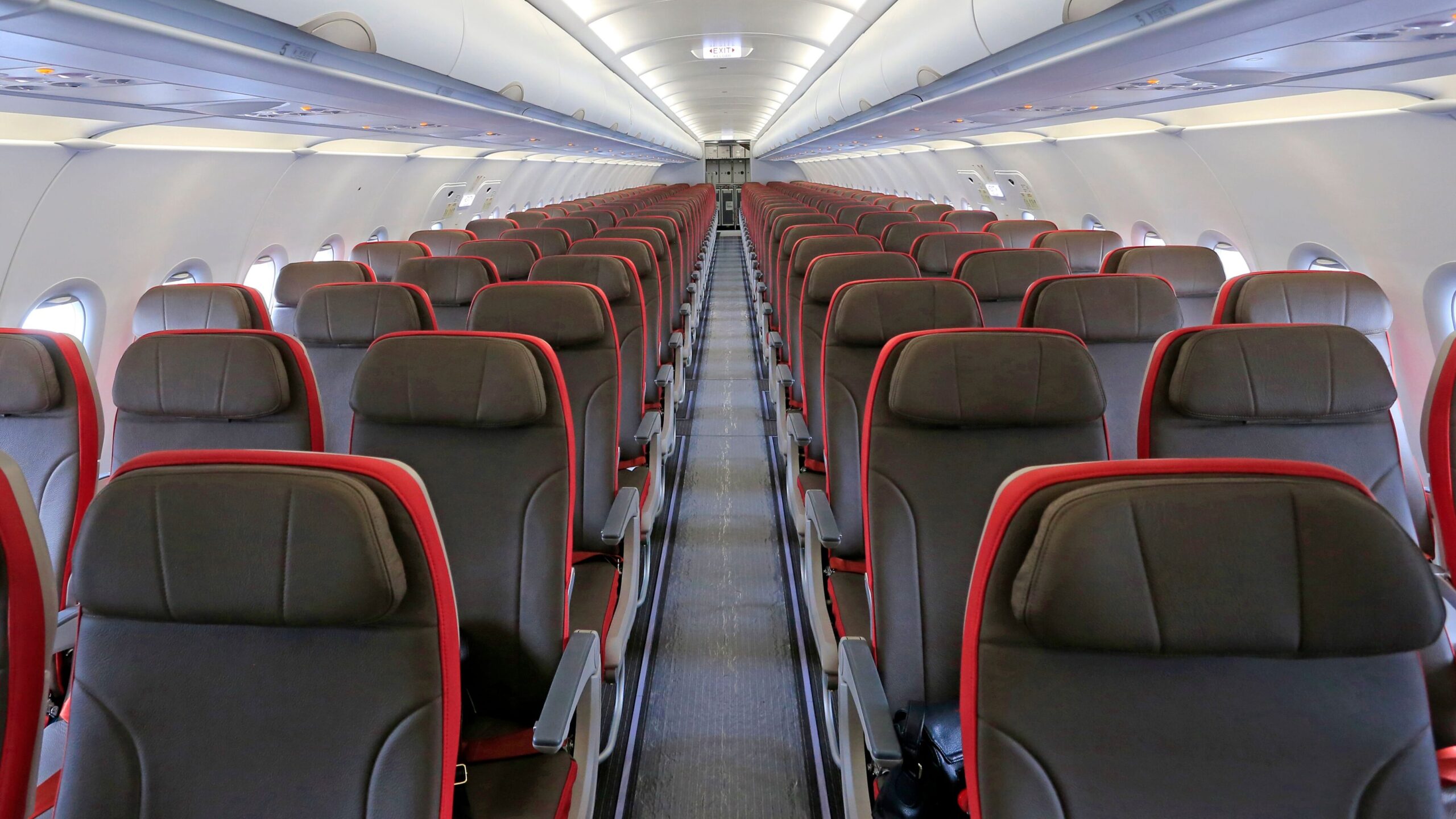
An airline may intentionally stop selling its lowest fares weeks before departure, even if dozens of seats remain empty. Why? Because it expects higher-paying business travelers or last-minute leisure travelers to book closer to departure.
To passengers, the flight may appear underbooked.
To the airline, those empty seats represent future revenue opportunities, not unsold inventory.
Understanding this concept is the key to understanding why airlines sometimes fly with empty seats. Their goal isn’t to maximize the number of passengers onboard, it’s to maximize the total revenue generated by every flight.
Network Economics Matter
Individual flights are only one piece of a much larger system. Airlines operate networks, not isolated routes.
For example, a passenger flying:
- Newark → Chicago → Denver → San Diego
may generate far more revenue than someone traveling only Newark → Chicago.
Because of this, airlines sometimes reserve seats for connecting passengers who contribute more overall revenue to the network.
An empty seat today may be preferable to displacing a higher-value traveler tomorrow.
Some Flights Exist to Support Other Flights
Not every route needs to be profitable on its own. Hub-and-spoke airlines depend on feeder traffic. A regional flight carrying 40 passengers into a hub may connect those travelers onto multiple long-haul flights.
And when viewed independently, the route may seem weak, but viewed as part of the network, it may be critical. This is one reason airlines occasionally operate flights that appear lightly booked.
The value isn’t always visible from the cabin.
Fixed Costs Change the Math
Many airline expenses remain largely unchanged whether a flight carries 100 passengers or 150. Here’s why:
- The aircraft still needs pilots.
- The aircraft still requires maintenance.
- The airport still charges fees.
- The gate still needs staff.
Once a flight is scheduled, canceling it often creates more disruption and cost than operating it with fewer passengers. And as a result, airlines frequently choose to operate flights even when load factors are below ideal levels.
Why Travelers Misread Empty Flights
When travelers see open seats on a flight, they often assume demand was weak or that the airline mispriced the ticket.
Sometimes that’s true. But often, those empty seats tell a very different story.
Airlines frequently protect inventory for higher-paying business travelers, last-minute bookings, elite upgrades, or passengers connecting from other flights. If that expected demand never materializes, those seats may depart empty.
Revenue management is ultimately a forecasting exercise. Every day, airlines make thousands of predictions about future demand, customer behavior, and how many seats they should sell at each price point.
Some of those forecasts are remarkably accurate.
Others miss the mark.
By the time the aircraft pushes back from the gate, pricing decisions that determined how many seats were sold may have been made weeks, or even months, earlier.
An empty seat isn’t necessarily evidence of a failed flight.
More often, it’s the visible result of a calculated pricing strategy that prioritized maximizing revenue over simply filling every available seat.
The Fare Theory
A half-empty airplane doesn’t necessarily represent failure…it represents a tradeoff.
Airlines aren’t trying to maximize passengers. They’re trying to maximize revenue across an entire network of flights, routes, and customers.
That’s why a plane can depart with empty seats and still be profitable.
And it’s why travelers who focus only on occupancy often misunderstand how airline pricing actually works.
Because in airline economics, the most important question isn’t:
“How many seats did they sell?”
It’s:
“How much revenue did they generate?”